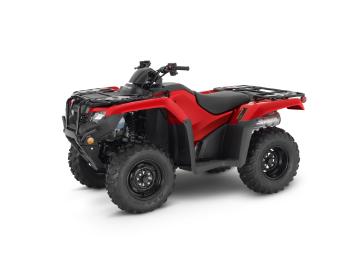
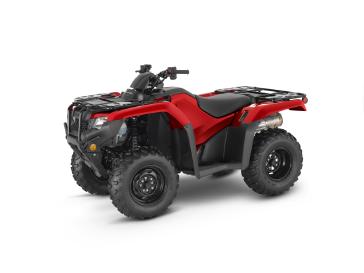
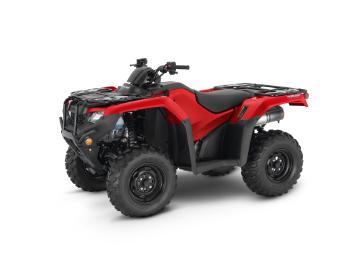
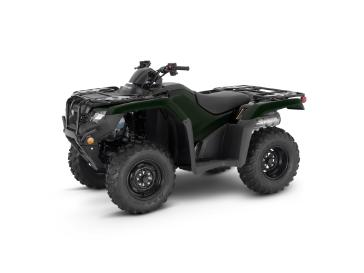
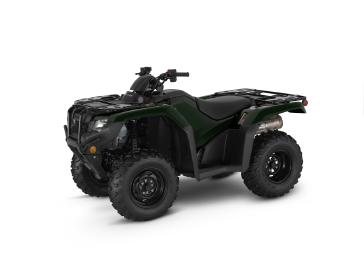
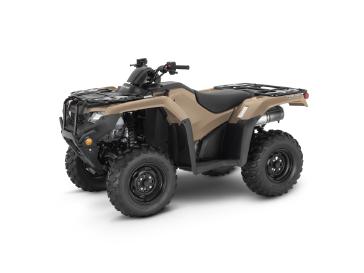
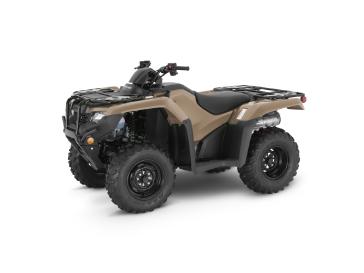
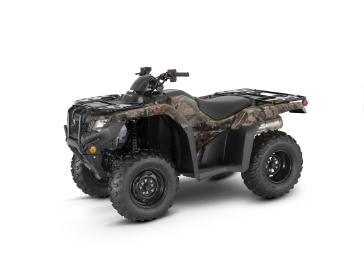
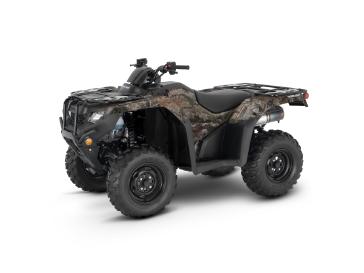
For decades, Honda’s Rancher lineup has been a benchmark in the midsize multipurpose ATV category, earning a reputation for reliability, versatility and everyday usability. Built to handle demanding work tasks and still be comfortable and enjoyable on the trail, the Rancher platform is available in four configurations—with options for two- or four-wheel drive, a standard gearbox or Honda’s advanced automatic Dual-Clutch Transmission (DCT), plus a version with independent rear suspension. All are planned in Georgia, developed in Ohio and produced in North Carolina, using domestic and globally sourced parts, and all reflect Honda’s commitment to practical innovation and proven engineering.
HISTORY
Upon its debut for the 2000 model year, Honda’s FourTrax Rancher quickly earned a reputation as a benchmark in the midsize multipurpose ATV category among outdoor enthusiasts, farmers and workers. The original model featured a 329cc single-cylinder engine, with a manual or Hondamatic transmission, and it was available in two-wheel-drive and four-wheel-drive configurations. With good ground clearance and a low center of gravity, the Rancher handled as well as some competitors’ sport ATV models.
For 2004, Honda equipped the restyled Rancher AT with an all-new 397cc single-cylinder engine, mated to a second-generation Hondamatic transmission, plus push-button Electric Shift Program (ESP) for manual shifting.
The model was completely redesigned for 2007, with a more powerful, liquid-cooled 420-class engine, as well as electronic fuel injection. It was available in four variations—2WD standard or ESP and 4WD standard or ESP—all of which featured a beefy cooling system, a corrosion-resistant stainless-steel exhaust system and front disc brakes. Four-wheel-drive versions also offered TraxLok, for selectable 2WD/4WD operation.
For the 2009 model year, the immensely popular FourTrax Rancher became the first powersports product offered with Honda’s now-famous Dual Clutch Transmission (DCT), providing five-speed auto-shifting or push-button manual gear selection. The model was also available with Electric Power Steering or conventional manual steering, as well as double-wishbone independent rear suspension for class-leading handling, plus disc brakes front and rear.
For the 2014 model year, Honda redesigned the Rancher again, with an all-new frame and an independent-rear-suspension design, and for 2020 the model received updated utility racks with Honda Pro-Connect compatibility.
Throughout each model year of its life, the FourTrax Rancher has been offered in a variety of trim levels and configurations, to suit the varying needs of customers.
TRIM LEVELS
- FourTrax Rancher: The value-focused, two-wheel-drive configuration is the simplest and lightest Rancher, ideal for trail riding or performing chores.
- FourTrax Rancher 4x4: This trim level includes the ability to switch between 2WD and 4WD with the push of a button, making it versatile and capable for handling tough, off-road conditions. It’s perfect for riders who need a bit more traction for rugged terrain.
- FourTrax Rancher 4x4 Automatic DCT EPS: This Rancher version is equipped with Electric Power Steering (EPS), which reduces steering effort and improves handling, especially in slow-moving, heavy-load or off-road applications. It also comes with Honda’s high-tech Dual Clutch Transmission technology, which delivers quick, efficient gear changes automatically.
- FourTrax Rancher 4x4 Automatic DCT IRS EPS: This configuration incorporates independent rear suspension (IRS), offering superior comfort and handling, especially on rough or uneven terrain. IRS reduces the impact of bumps and rough ground, for a smoother ride—beneficial for those who ride for extended periods or on difficult terrain.
DESIGN / STYLING
Rugged yet refined, the Rancher’s design blends purposeful styling with practical functionality, resulting in an ATV that looks as capable as it performs. Its LCD display is easy to read and provides information on up to 13 functions. On the DCT versions, the handlebar-mounted shifting and drive-mode controls are positioned for easy reach and give positive tactile feedback, even when the rider is wearing gloves.
At the front deck, a 1.9-liter utility box with weatherproof cover is designed to keep sundries like a phone, map or camera within easy access from the riding position (when stopped). This storage compartment complements the utility box that is positioned within easy reach, on the left-front fender.
The front and rear cargo racks are rated for 66 pounds and 133 pounds, respectively, and they accept Honda Pro-Connect accessories for smooth integration, thanks to a precise fit and simple attachment via a quick-connection latch system.
For protection, guards extend the length of the lower suspension arms, delivering full coverage of the driveshaft and outboard CV joints.
ENGINE / DRIVETRAIN
Power is supplied by a 420cc liquid-cooled fuel-injected single-cylinder four-stroke engine that is a proven, reliable performer. The engine features compact architecture with a low height, helping to centralize mass for optimum handling, and a narrow width that allows for a comfortable rider compartment. The power plant is longitudinally mounted, allowing direct driveshaft alignment to front and rear wheels for maximum drivetrain efficiency. The engine and exhaust system are rubber-mounted, for reduced vibration.
On 4x4 versions, Honda TraxLok® allows 2WD or 4WD riding with the flip of an electronic switch; the 4WD features a locking front differential (also engaged electronically) maximizing traction over rough terrain. Speed Override mode in TraxLok 2WD/4WD delivers excellent performance in deep mud and other extreme terrain, by allowing faster wheel speed with the front differential locked.
Honda’s programmed electronic fuel-injection system provides clean, responsive power delivery and great fuel efficiency. The evaporative emissions device complies with California requirements for year-round legal use in public off-road riding areas. A strong AC generator produces enough power to run electrical accessories.
All Rancher versions boast an 848-pound towing capacity, making pulling loads for work a breeze.
Transmission
Of the four Rancher trim levels, two feature a manual-shift five-speed transmission with reverse, and two come with Honda’s high-tech automatic Dual Clutch Transmission (DCT).
In the world of powersports, Honda is a pioneer with DCT technology, and the Rancher is the model that DCT debuted on back in 2009. Since then, the technology has been offered on Honda motorcycles (including touring, sport-touring, adventure and cruiser models), as well as side-by-sides and other Honda ATV models. While similar systems can be found in a number of high-performance sports cars, Honda pioneered the use of DCT in the powersports world and has accumulated experience and improved the technology along the way. The system has been well-received by customers and the media, thanks in part to the fact that it enables riders to focus attention on riding, without concern of stalling.
DCT delivers consistent, rapid, seamless gear changes, and it very quickly becomes second nature to use. It utilizes two clutches—one for startup and first, third and fifth gears, the other for second and fourth gears—with the main shaft for one clutch located inside that of the other. Each clutch is independently controlled by its own electro-hydraulic circuit. For a gear-change to occur, the system pre-selects the target gear through the clutch not currently in use; the first clutch is then electronically disengaged as the second clutch simultaneously engages. As the twin clutches transfer drive from one gear to the next with minimal interruption, gear-change shock and pitching of the machine are minimized, resulting in shifts that are not only smooth, but direct. The extra benefits of durability (as the gears are less likely to be damaged by missing a shift), low-stress riding and reduced rider fatigue add to the appeal of DCT.
Manual-override capability allows the rider to manually change gears even when in automatic mode. (The transmission reverts back to fully automatic mode after a few seconds.) This provides a high level of control, making it possible to downshift on corner entry or on descents, for example.
CHASSIS / SUSPENSION
All Rancher trim levels feature a steel, double-cradle frame engineered for an optimum balance of stiffness, compliance and torsional rigidity, delivering precise handling and a comfortable ride. The ergonomics are engineered for a riding position that allows rider mobility, control, comfort and safety, with a seat that is contoured and comfortable for long days of work or play.
The Rancher is available with Electric Power Steering (EPS), for minimal steering effort (especially beneficial when the front differential is locked), with a system that adjusts for vehicle speed and the steering force being used by the rider. EPS also reduces kickback through the handlebar.
The wheel bearings are fully serviceable, as are the pivot bushings and ball joints.
Suspension
Depending on the application, the Rancher is available with either plush, trail-oriented independent rear suspension or a work-focused rear swingarm, for minimal body roll. Both offer long travel and good ground clearance, and both feature adjustable spring preload to tune suspension to match the preferred riding style or load.
Brakes
Dual 190mm front hydraulic disc brakes and a single 170mm rear hydraulic disc brake provide strong stopping power on the FourTrax Rancher 4x4 Automatic DCT IRS EPS, while remaining FourTrax Rancher trim levels utilize dual 190mm hydraulic disc brakes up front and a proven, 160mm mechanical drum-brake setup out back.
# # #