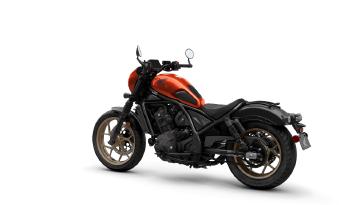
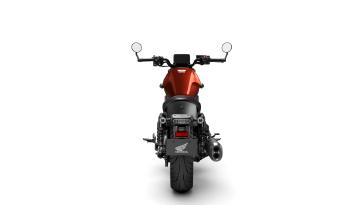
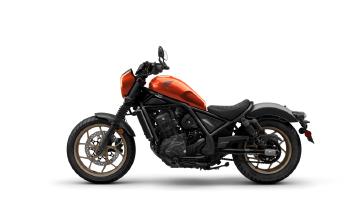
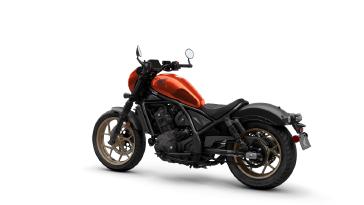
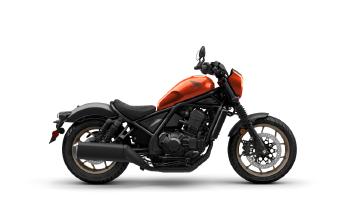
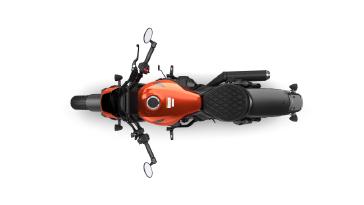
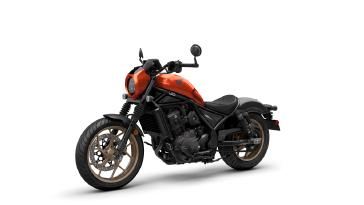
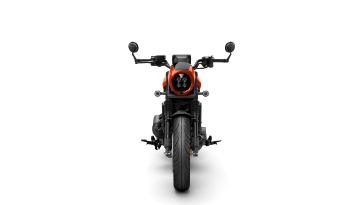
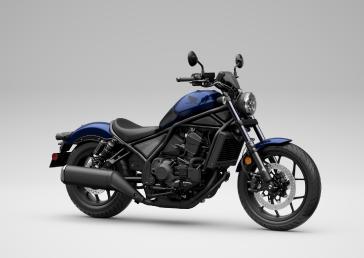
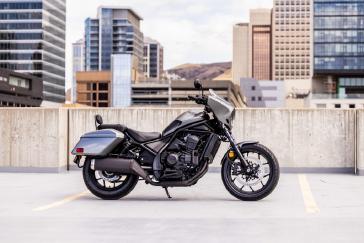
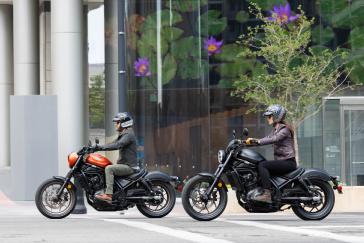
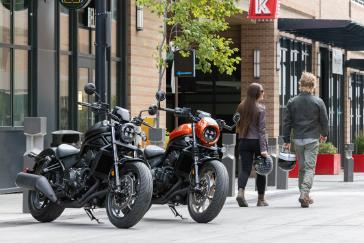
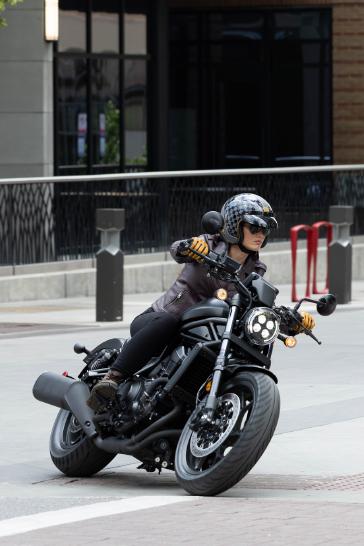
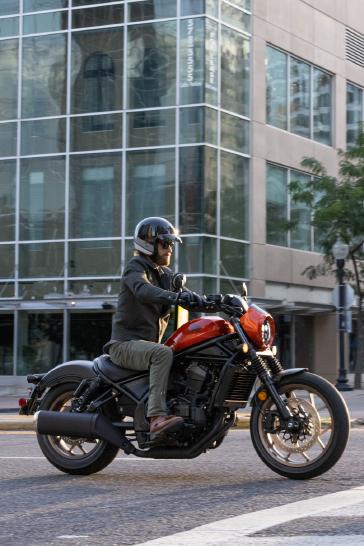
- Rebel 1100 (CMX1100)
- Rebel 1100 DCT (CMX1100D)
- Rebel 1100 DCT SE (CMX1100D3)
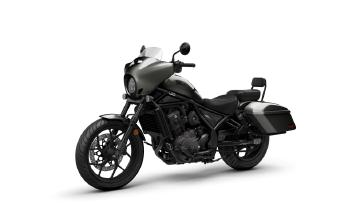
- Rebel 1100T (CMX1100T)
- Rebel 1100T DCT (CMX1100TD)
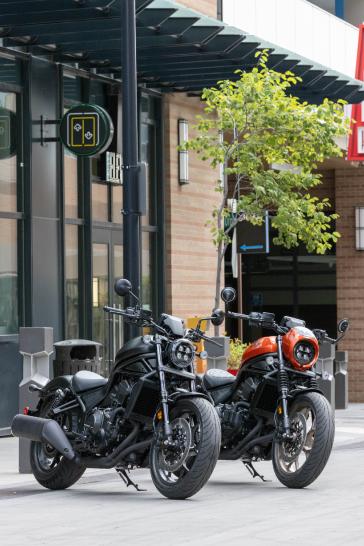
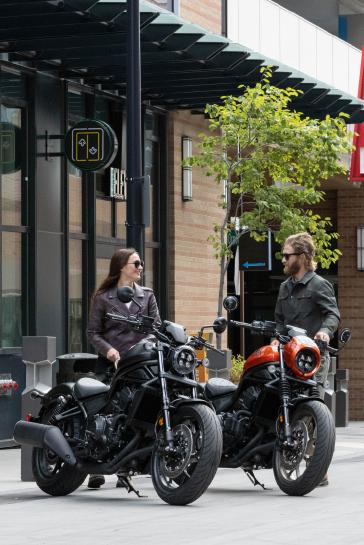
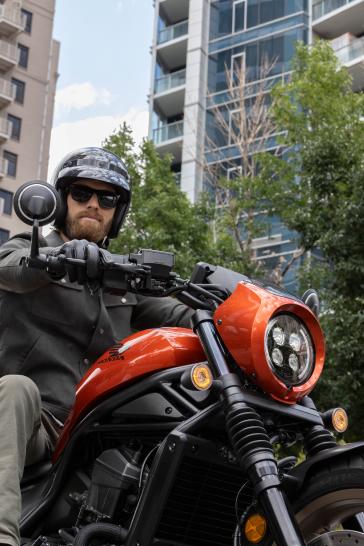
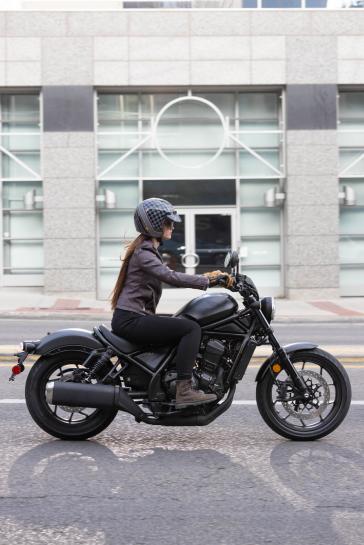
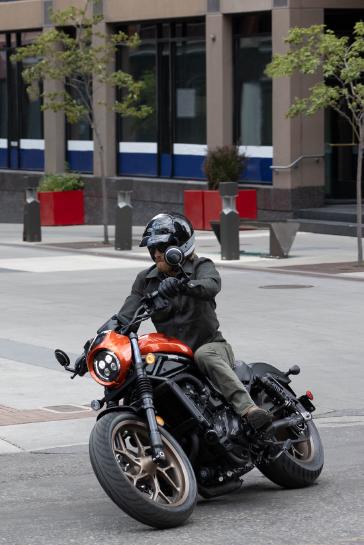
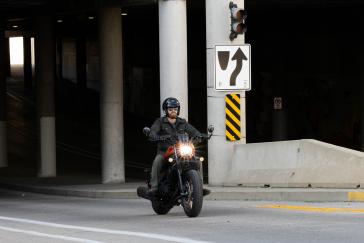
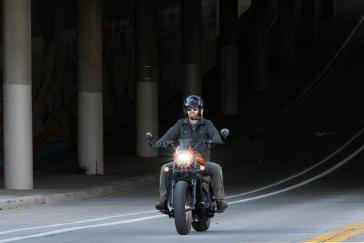
With traditional cruiser styling and a torquey parallel-twin engine, Honda’s Rebel 1100 appeals to every variety of cruiser enthusiast, with five trim levels offered for the 2025 model year—all of which benefit from updates to comfort and convenience. Changes include an improved riding position and seat, more-visible meter, and a charging outlet for electronic accessories. In addition, the Rebel 1100 is the first U.S. Honda motorcycle to come with RoadSync; standard on all trim levels, this feature enables on-the-go hands-free navigation, listening to music, checking the local weather forecast and more.
New to the platform is the Rebel 1100 DCT SE. Like the Rebel 1100 DCT, the SE comes standard with Honda’s high-tech dual-clutch transmission and delivers the ultimate cruiser experience, but with more premium styling-focused components preinstalled.
NEW FOR 2025
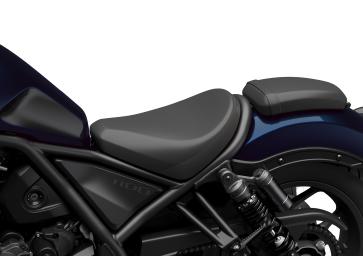
- Seat cushion is 10mm thicker for improved comfort, especially on longer rides.
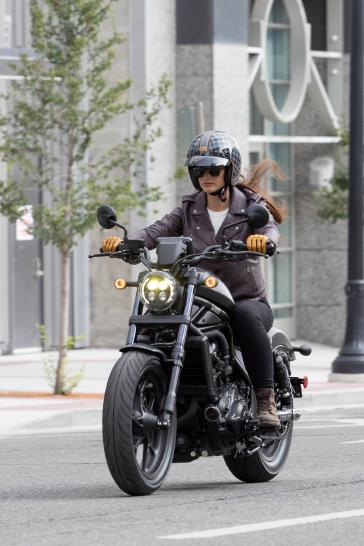
- More comfortable riding position, with grips 12mm higher and 28mm back, and footpegs 50mm forward.
- Honda RoadSync added to all trim levels, making the Rebel 1100 the first Honda motorcycle offered with this feature in the U.S. Compatible with the iOS and Android smartphone platforms via Bluetooth and the Honda RoadSync app, this feature enables hands-free navigation, listening to music, checking the local weather forecast and more.
- New USB socket standard, positioned near handlebar for easy integration of powered accessories.
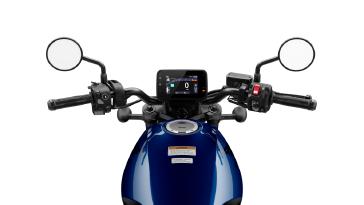
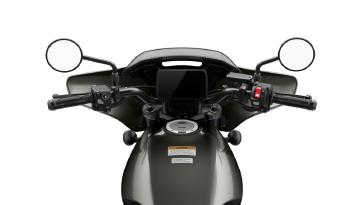
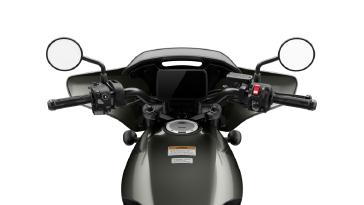
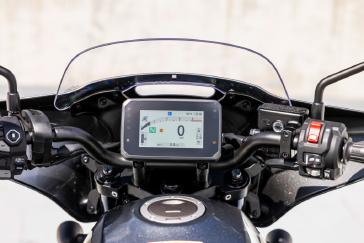
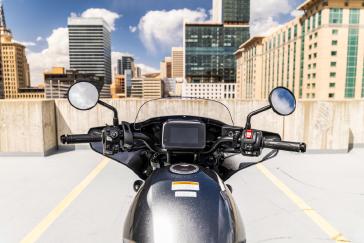
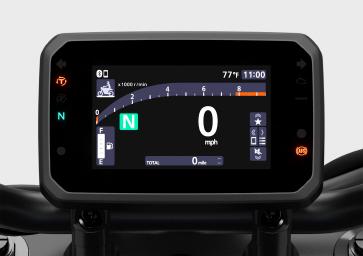
- New visor shields meter from sun, improving visibility.
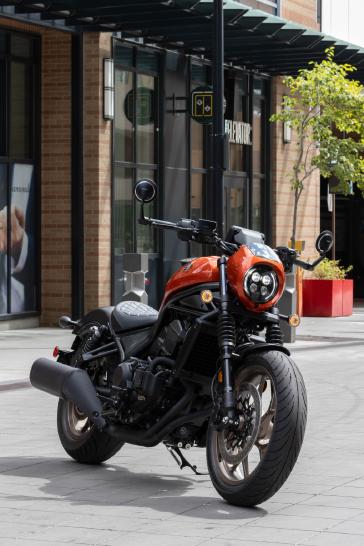
- New-for-2025 Rebel 1100 DCT SE trim level comes standard with styling-focused accessories preinstalled, including fork boots, bar-end rear-view mirrors, a color-matched headlight cowl, a short front fender, and a special seat with different cover.
TRIM LEVELS
For the 2025 model year, Honda’s popular Rebel 1100 cruiser platform includes models in five different trim levels:
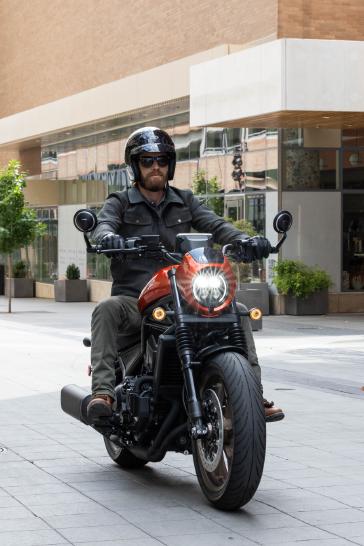
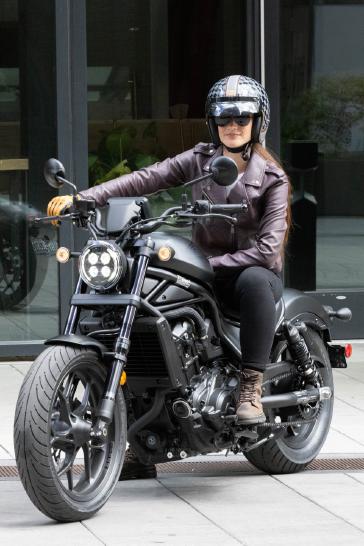
- Rebel 1100: A hit with customers since its 2021 introduction, the standard Rebel 1100 embodies modern cruiser performance, with sporty handling and a clean, contemporary design.
- Rebel 1100 DCT: This version starts with the standard Rebel 1100 and adds Honda’s high-tech automatic dual-clutch transmission, which has proved to be a big hit on this platform.
- Rebel 1100 DCT SE: Adding preinstalled components, this is the premium iteration of the Rebel 1100 platform, offering the most in terms of styling.
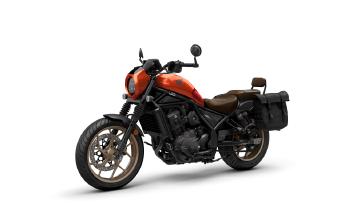
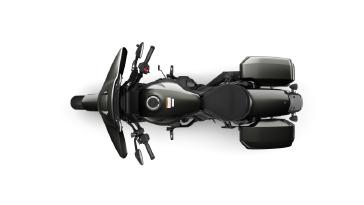
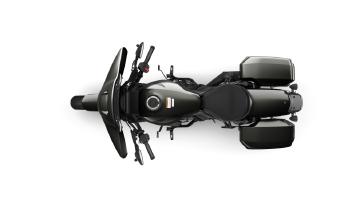
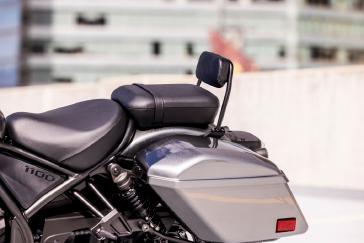
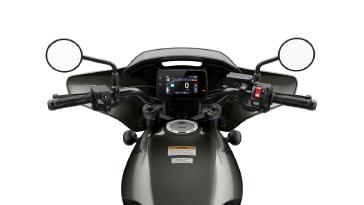
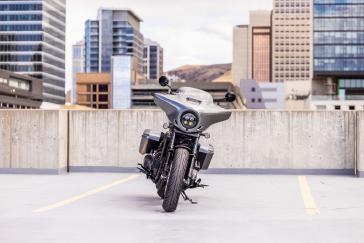
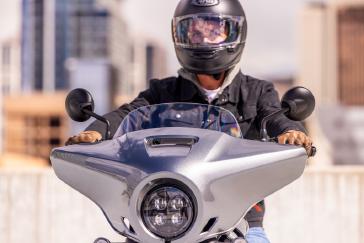
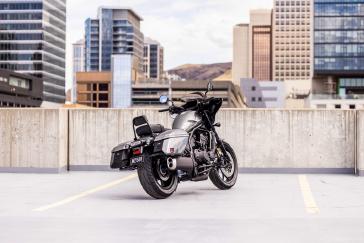
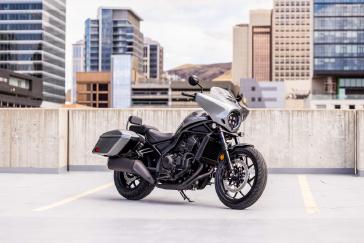
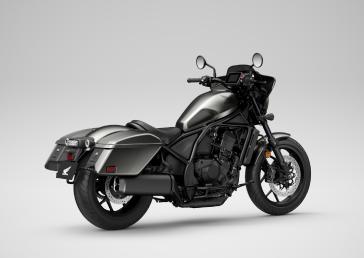
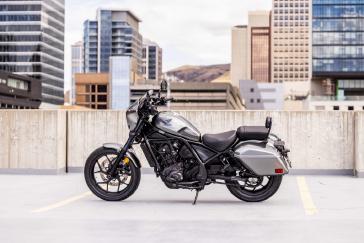
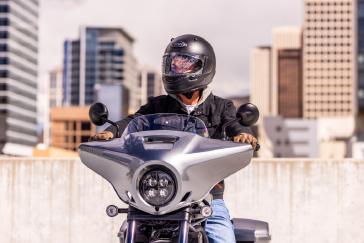
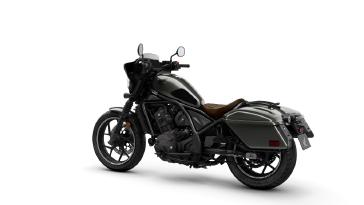
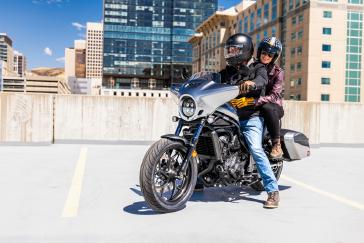
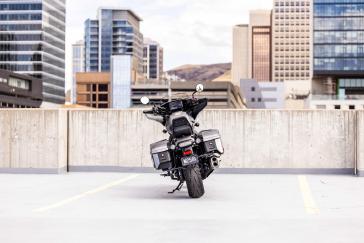
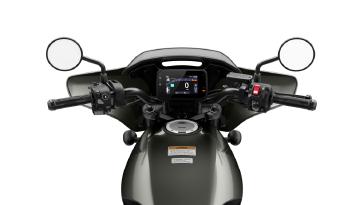
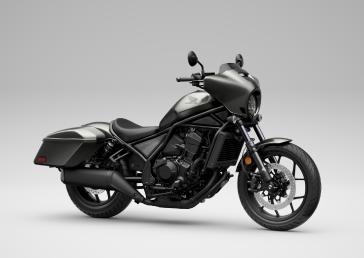
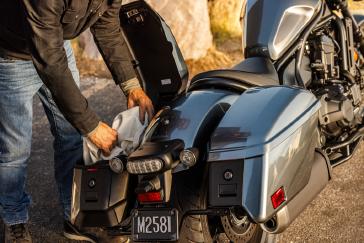
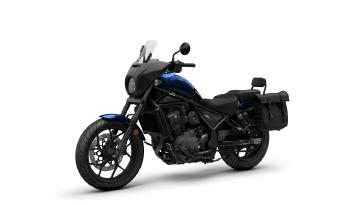
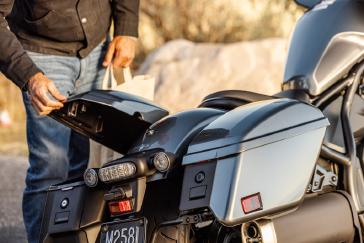
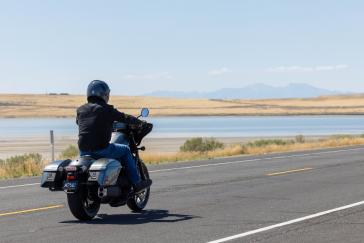
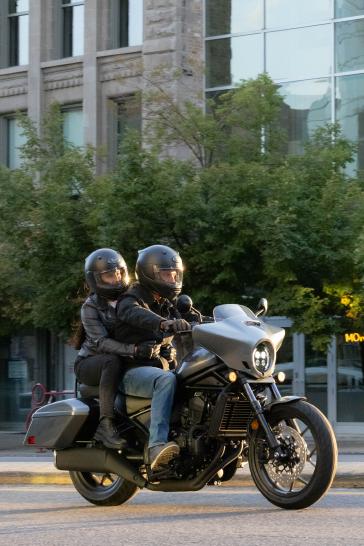
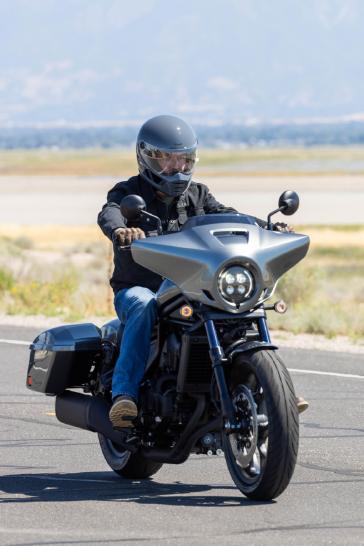
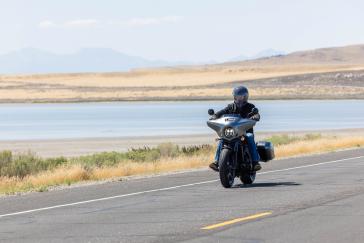
- Rebel 1100T: For the touring-minded rider, the Rebel 1100T comes with a protective handlebar fairing and roomy, color-matched hard saddlebags, perfect for all-day and overnight excursions.
- Rebel 1100T DCT: As is the case with the standard Rebel 1100, the “T” version is available with Honda’s automatic dual-clutch transmission.
STYLING & DESIGN
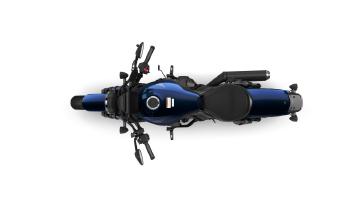
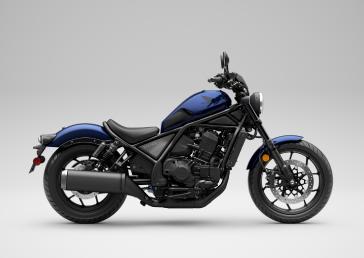
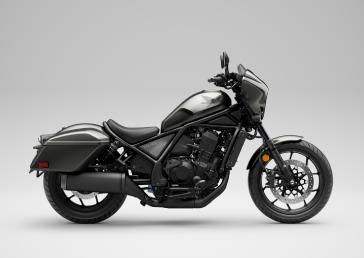
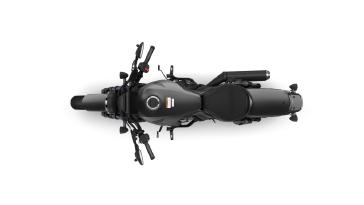
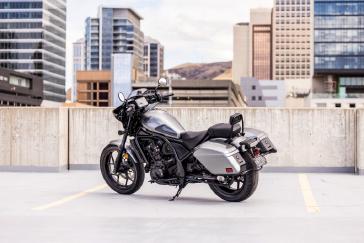
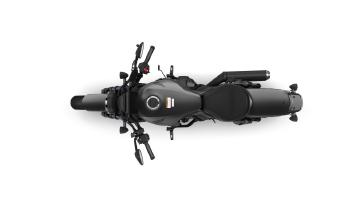
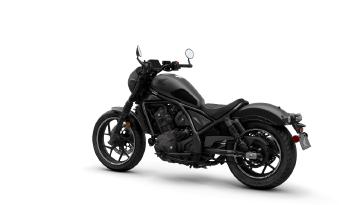
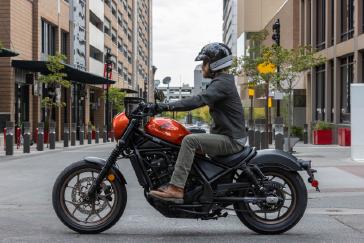
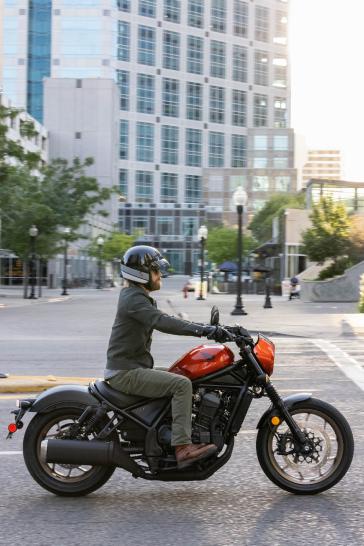
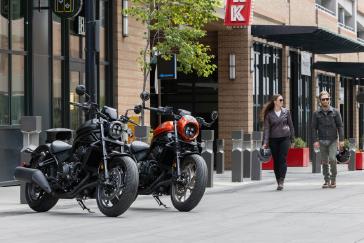
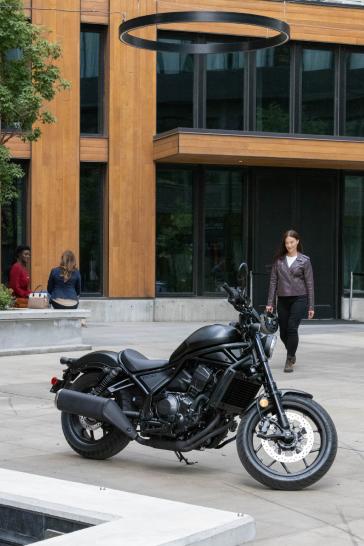
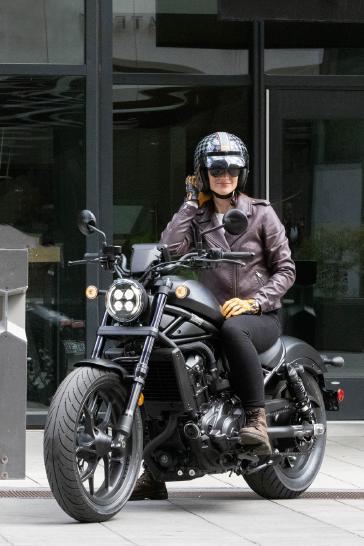
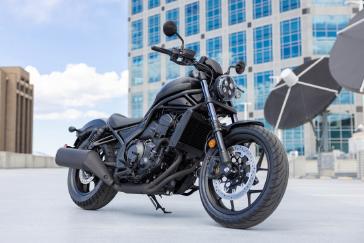
Simple, raw and casual-yet-serious, the Rebel 1100 has a striking appearance when parked but looks even better in use, thanks to a handlebar-seat-foot peg triangle that unites rider and bike.
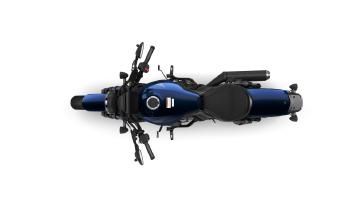
The narrow, curvy steel frame has a simple, organic profile. Its 35mm main tube contributes a bulky appearance to the machine’s sleek form, while the rear has looping lines. The low, long, scallop-style, flangeless fuel tank is enhanced by subtle, low-contrast, two-tone colors. Fuel capacity is 3.6 gallons, including a 1.1-gallon reserve—sufficient for touring.
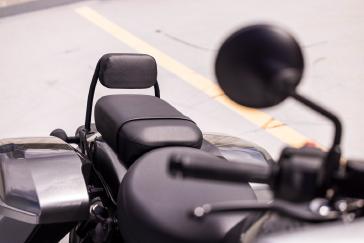
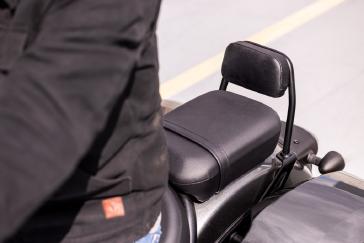
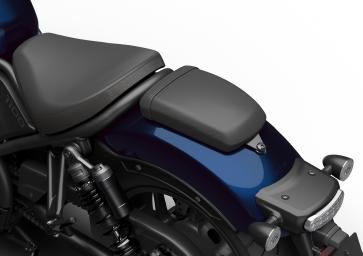
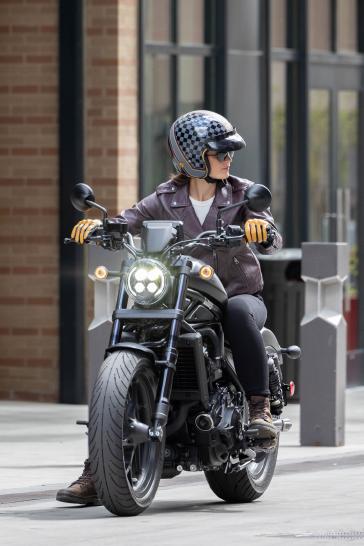
The narrow, saddle-type seat has a soft texture and progressive foam thickness, maximizing comfort for long trips. The narrow front section makes it easier to put both feet on the ground at stops, and the dished design holds the rider comfortably in place, even during vigorous acceleration. The seat is easily removable, revealing a 3-liter storage space, plus 3-amp USB-C terminals, handy for stowing and charging a smartphone or other gadgets.
The front and rear fenders are both made of 1mm steel, produced through a drawing process and are attached with handsome, die-cast aluminum brackets. An available accessory passenger seat bolts to the rear fender.
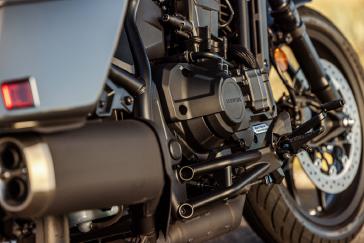
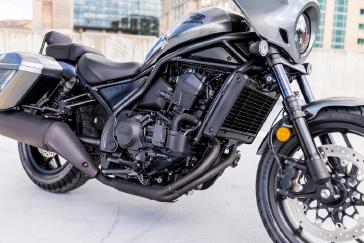
The engine, frame, suspension and other components are blacked out; even the D.I.D drive chain is plated with black highlighting, enhancing the bike’s raw, cool character.
The “bagger”-style Rebel 1100T DCT trim level comes standard with a fork-mounted large windscreen for protection from the elements, and a pair of lockable hard saddlebags offer a combined 35 liters of storage space.
New for the 2025 model year, the Rebel 1100 DCT SE comes standard with styling-focused features preinstalled, including fork boots, bar-end rear-view mirrors, a color-matched headlight cowl, a short front fender, and a special seat with different cover.
Honda RoadSync
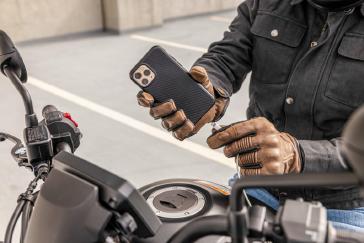
The Rebel 1100 is the first Honda motorcycle offered in the U.S. with Honda RoadSync. Compatible with the iOS and Android smartphone platforms via Bluetooth and the Honda RoadSync app, this feature enables hands-free navigation, listening to music, checking the local weather forecast and more.
Meter / Controls
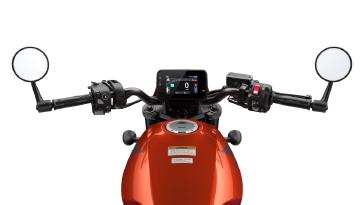
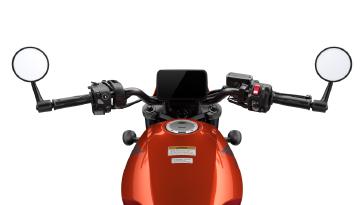
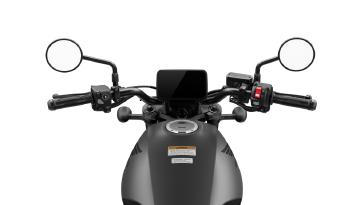
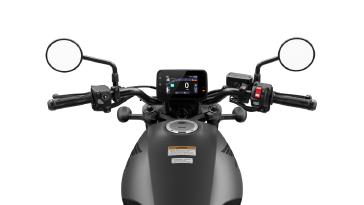
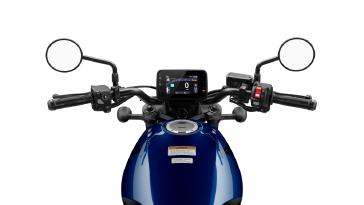
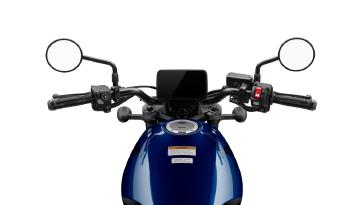
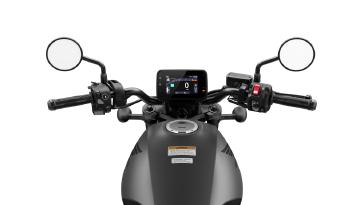
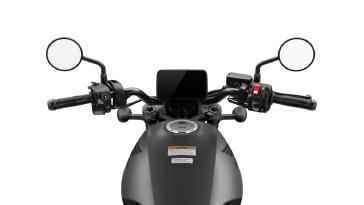
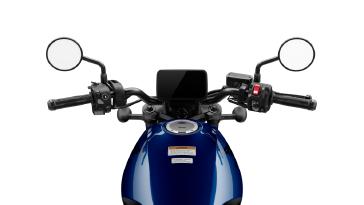
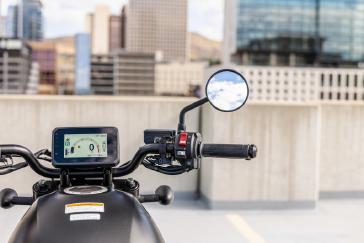
Adding to the Rebel 1100’s high-quality look and feel is a 5-inch, full-color TFT screen, which uses optical bonding to maximize visibility in bright sunlight. Glare is minimized through the use of resin to seal the gap between the cover glass and the TFT screen, and backlight transmittance is optimized. The screen can be customized according to rider preference by selecting from three styles (bar, circle and simple), multiple brightness levels, and black or white high-contrast backgrounds. A variety of information is provided, including selected gear and ride mode.
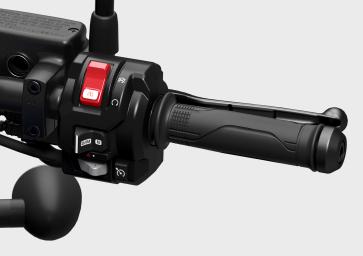
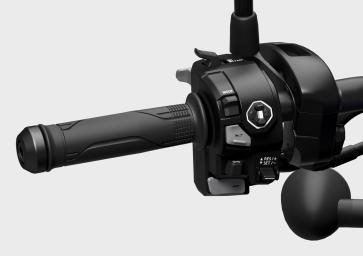
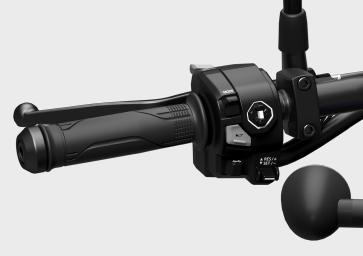
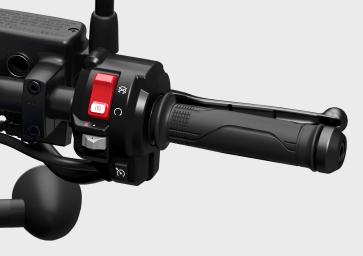
Management is via the screen and switchgear on the handlebar. The lefthand switchgear includes upshift and downshift controls (on DCT versions), a four-way toggle switch for menu navigation, a ride-modes button, a cruise-control speed-adjustment switch, a turn-signal switch, a high-beam control switch and a horn. The righthand switchgear houses the start button, a cruise-control button, a button for selecting transmission mode (on DCT versions) and a hazard-light switch
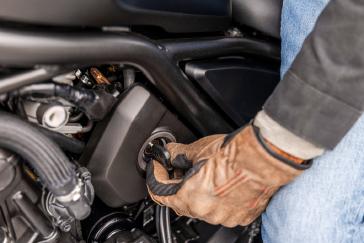
A USB-C socket is positioned near the handlebar, for integration of powered accessories like smartphones. The ignition switch is located away from the handlebar, on the left side of the frame (the switch can also be used to remove the seat).
Lighting
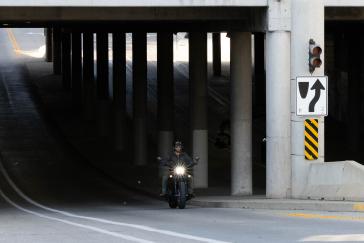
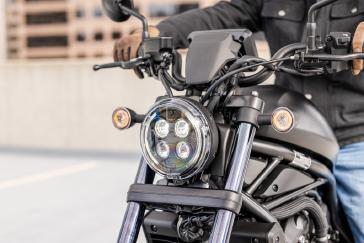
The modern headlight is 6.9 inches in diameter and houses four direct-emitting LED bulbs with thick inner lenses, achieving a cool, iconic look, and its low mounting position contributes to the bike’s sleek profile. Conspicuous light-directing guides are arranged on both sides of the housing to highlight the character lines of the lenses and enhance the field of vision.
The 2.1-inch diameter turn signals are also LED and match well with the Rebel styling. The front signals have impressive-looking round light-guiding rings inside that function as position lights and also enhance the field of vision.
The LED taillight has a thin, simple, oval design that complements the low-slung cruiser style. A small LED light illuminates the license plate.
Cool, raw styling, stimulating performance, modern controls and relaxed comfort come together—all in one machine.
ENGINE / DRIVETRAIN
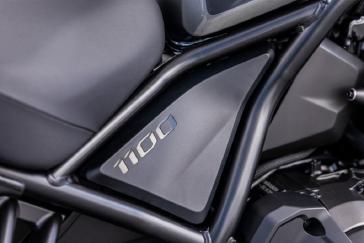
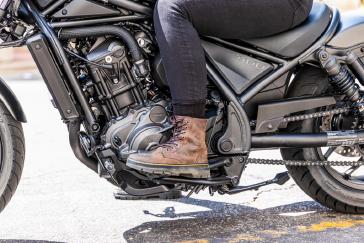
At the heart of the Rebel 1100 is a torquey, liquid-cooled parallel-twin 1,083cc engine, made popular in the legendary Africa Twin adventure platform and adopted in order to achieve dynamic performance in a cruiser application. The engine’s powerful torque and output are adjusted for easy handling, enabling both exciting rides and pressure-free, relaxed touring. The available automatic DCT further enhances both types of riding experiences.
The parallel-twin design aids vehicle packaging, making it possible to locate heavy parts on the rear of the engine, enhancing mass centralization and a low center of gravity. Further contributing to the tidy engine layout is the Unicam® single-overhead-camshaft valvetrain design. Also found on Honda’s high-performance CRF450R motocrosser, the design lowers the engine’s cylinder head, contributing to the mill’s compact size. In addition, a dry-sump lubrication system places the oil tank inside the crankcase, allowing a thinner oil pan and low CG.
Together, these features contribute to the Rebel 1100’s excellent handling and a deep lean angle for aggressive cornering, while still allowing the squat styling and low seat height (27.5 inches) that are intrinsic to cruisers, and that enable riders to easily place both feet on the ground at stops or during parking-lot maneuvers.
The uneven firing interval provided by the 270-degree crankshaft design animates a pulsing, rhythmic feel at idle and low engine speeds. A two-axis primary balancer minimizes unpleasant vibrations by canceling primary inertia, resulting in a smooth-running engine that still produces substantial power.
Sophisticated electronic ignition timing and fuel-delivery maps give the Rebel 1100 engine a character all its own. Compared to the Africa Twin, the flywheel is 20 percent heavier, increasing the moment of inertia for a torquey characteristic, and the air filter and exhaust-system designs are unique. The combined result is enhanced cylinder “pulsing” at low rpm, while power at higher engine speeds is maximized. The muscular engine signature is unlike that of any other cruiser on the market, delivering both relaxed and exciting riding experiences.
Dual Clutch Transmission
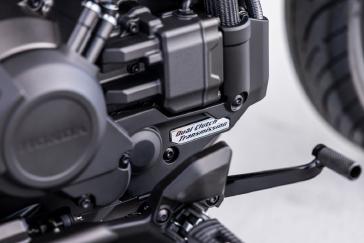
The Rebel 1100, Rebel 1100 SE and Rebel 1100T are available with a six-speed automatic dual clutch transmission—which Honda pioneered in the powersports world. Contributing to a steady, safe, comfortable and fun ride, DCT is a geared transmission with the durability and efficiency of a conventional gearbox, but that also has automatic clutch and gear-shifting, allowing the rider to focus on other operations. There is no clutch lever or foot shift lever.
Honda introduced DCT to powersports in the 2007 Rancher ATV, followed by the 2010 VFR1200F sport-touring motorcycle. Since then, the technology has evolved in high-performance vehicles like the Africa Twin adventure platform and the Talon sport side-by-side, as well as the Pioneer 1000 multipurpose side-by-side and the Gold Wing touring motorcycle.
The latest-generation Honda DCT featured on the Rebel 1100 has two coaxial main shafts and two automatic clutches, one for the odd-numbered gears (1/3/5) and one for the even-numbered gears (2/4/6). Multiple gears are engaged simultaneously so that the transmission is constantly prepared for the next shift. Data, collected by a series of sensors, is processed by the ECU, which uses an advanced algorithm to determine when the shift-control motor should hydraulically trigger gear changes. At those moments, one clutch disengages and the other engages, resulting in shifts that are quick, smooth and seamless. Power is delivered to the rear wheel via an efficient and durable 525 chain.
DCT also allows selection of a manual mode, with gear changes accomplished via buttons on the left switch cluster; even when riding in automatic mode, the rider can force manual shifts (for example, to induce engine braking), with the transmission returning to automatic shifting after several seconds.
Both the Rebel 1100 and the Rebel 1100T are also available with a manual transmission.
ELECTRONIC CONTROLS
In keeping with—and contributing to—its surprising sporting capabilities, the Rebel 1100 touts electronic rider aids not typically associated with the cruiser segment. Throttle-by-wire allows features including Honda Selectable Torque Control (which incorporates Wheelie Control) and riding modes, as well as cruise control.
HSTC / Wheelie Control
By controlling the throttle opening (and thus engine torque), Honda Selectable Torque Control inhibits rear-tire slip during acceleration and cornering, increasing rider confidence. When the level setting is switched on, the system detects differences between front- and rear-wheel speeds (suggesting that the rear tire is spinning). As the calculated slip ratio goes beyond a specific level set by the rider, the ECU controls fuel injection, and optimized engine torque controls rear-wheel drive. An indicator light on the meter panel illuminates when the system is in operation.
HSTC also incorporates Wheelie Control, which limits front-end rise during acceleration. When the system detects that the front wheel is decelerating while the rear wheel is accelerating, it infers that a wheelie is occurring and intervenes. Again, the result is an increase in rider confidence.
Riding Modes
These electronic rider aids, as well as DCT, are controlled and utilized through different ride modes, each of which provides a distinct riding experience, enhancing the Rebel 1100’s “Relax and Excite” ethos.
Three preset ride modes give the rider distinct options that result in different experiences for varying riding conditions, including commuting, long-distance trips, slippery road surfaces and carrying a passenger. Each ride mode is comprised of carefully balanced settings for power, HSTC (including Wheelie Control), engine braking and DCT shift timing.
- Standard: This mode has middle-of-the-road settings for all parameters, resulting in a riding experience that can be relaxed for city riding or cruising, yet exciting when the throttle is opened. Power is brisk but manageable, shift-timing is appropriate for a wide range of situations, engine braking is natural-feeling and HSTC suppresses unexpected slip.
- Sport: Programmed for exciting, spirited riding, this mode is great for exhilarating outings, on winding roads for example. It has an aggressive, strong power delivery and low intervention for HSTC. Engine braking is natural-feeling, and gear changes up and down occur at higher rpm, with vigorous blipping on downshifts to emphasize aggressiveness.
- Rain: Not just for wet conditions, this mode is ideal for situations when traction is limited, but also when a relaxed, enjoyable, comfortable, energy-conserving riding experience is desired. Throttle response and engine braking are both mild, and gear changes occur at lower rpm, for minimum shift shock and vehicle pitching. HSTC has high levels of intervention.
In addition, a customizable User mode can be set up to the rider’s exact preferences. When the bike’s ignition is turned on, the ECU remembers the previously selected mode.
The Rebel 1100 is the only model in its class to come standard with cruise control.
CHASSIS & SUSPENSION
Geometry
With a 59.8-inch wheelbase and a 30º fork angle, the Rebel 1100 achieves a cruiser style that belies its sporting capabilities. This is possible because the caster angle is actually 28º and the trail length is 4.3 inches, achieving both straight-line stability and neutral handling. Spirited riding is also facilitated by the aforementioned 27.5-inch seat height, the middle positioning of the foot pegs and foot controls, the neutral location and bend of the handlebar, the 35-degree bank angle (much more than most cruisers—similar to naked-bike), 4.7 inches of ground clearance and the low curb weight (varying between 487 pounds and 542 pounds, depending on trim level—measured with all required fluids and a full tank of fuel).
The tubular swingarm has a 50.8mm diameter.
Suspension
Also contributing to the sporting potential are high-performance suspension components. Consistent with the bike’s blacked-out styling, the 43mm conventional telescopic fork has stanchions that are coated with dark navy titanium oxide, while the two-part sliders are wrought and die-cast aluminum. A cartridge-type damper and 5.5 inches of wheel travel contribute to the machine’s sporty performance.
Rear suspension comprises dual Showa shocks with 12.5mm shafts and pressurized piggyback reservoirs for tough looks, good road-holding performance and consistent damping force. Rear-wheel travel is 3.7 inches.
At both ends, preload can be adjusted to tailor the ride to load and passenger conditions. The rear preload-adjustment range is particularly broad, allowing appropriate setup for a wide range of rider weights and preferences.
Brakes
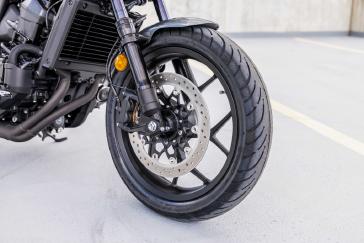
Slowing and stopping the Rebel 1100 is accomplished with high-quality braking components similar to those found on sport bikes, resulting in high-level vehicle control in a broad range of riding conditions. The single front caliper has a monobloc, four-piston, radial-mount design and squeezes a floating 330mm rotor. The rear caliper has a single piston and works a 256mm rotor. ABS is standard.
Wheels
Attractive, sporty, cast wheels with five Y-shaped spokes are used both front and rear, providing optimum rigidity and contributing to the bike’s neutral handling character. The radial tires are size 130/70-18 (front) and 180/65-16 (rear), for a voluminous look and powerful styling.
ACCESSORIES
More than any category, cruisers are about customization—for performance, appearance and convenience—and Honda makes that possible with a long list of Rebel 1100 accessories, from minimalist to tour-focused. Examples include cowls, bags, seats, backrests, short fenders and tank pads, heated grips, alarms and more.