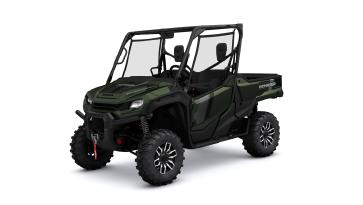
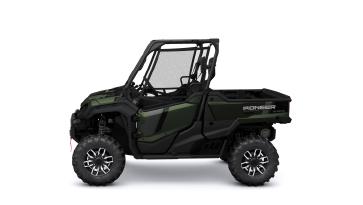
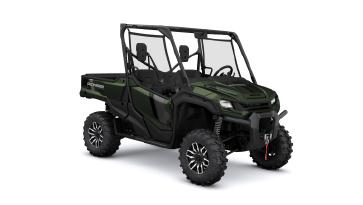
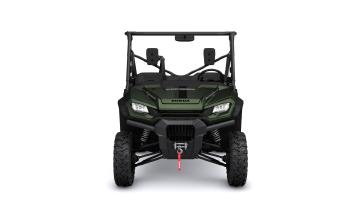
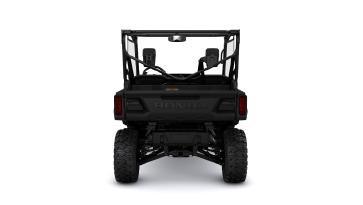
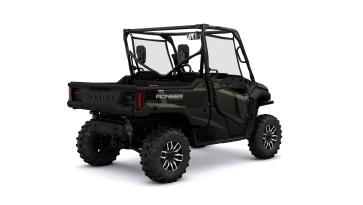
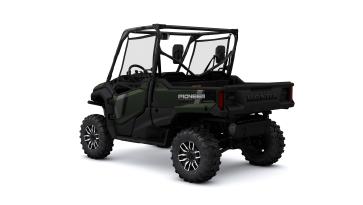
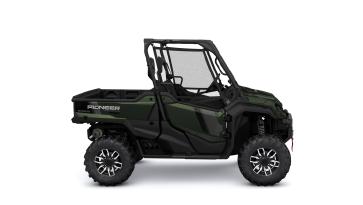
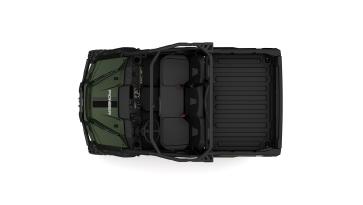
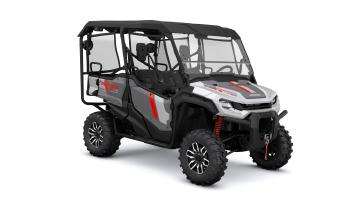
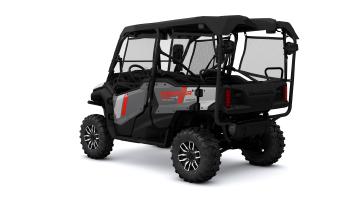
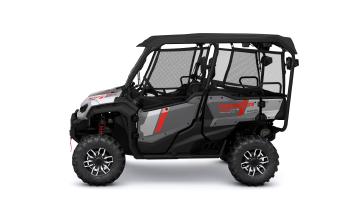
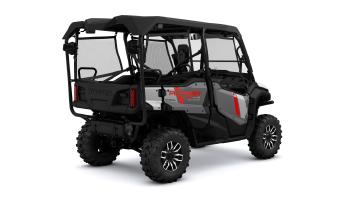
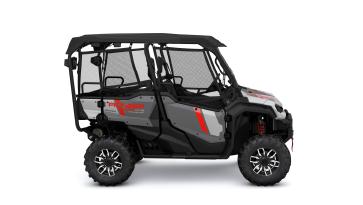
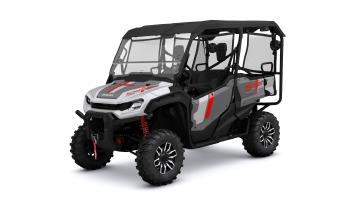
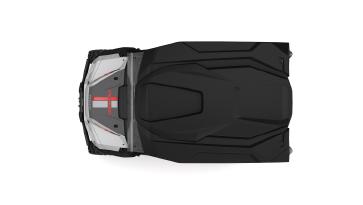
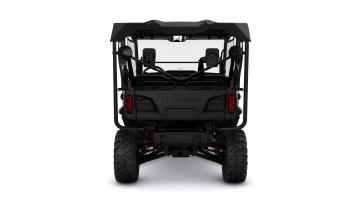
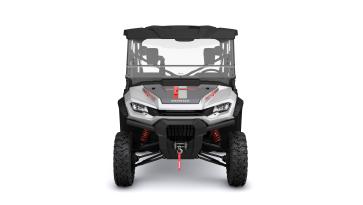
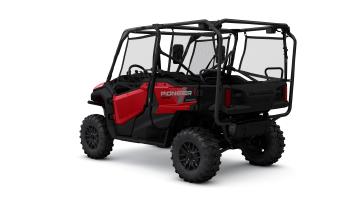
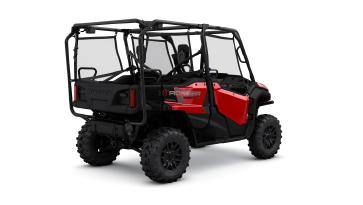
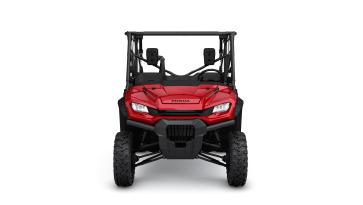
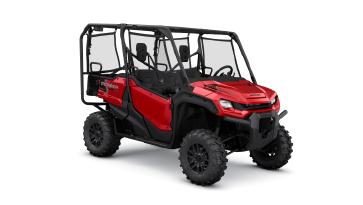
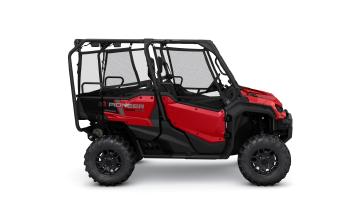
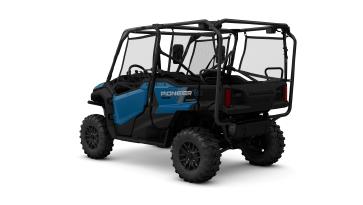
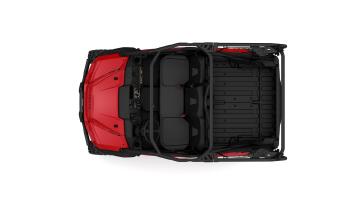
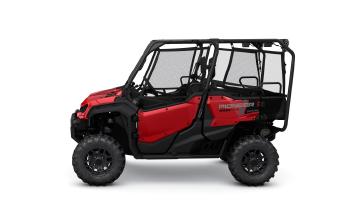
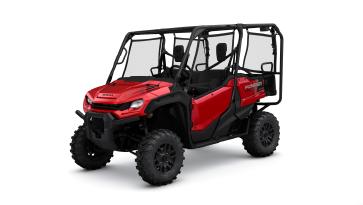
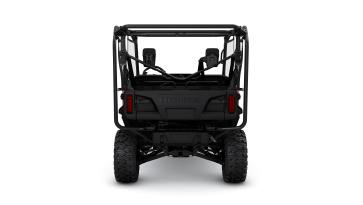
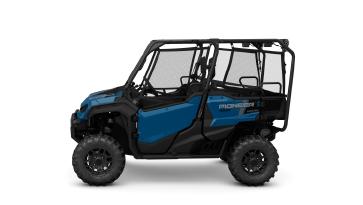
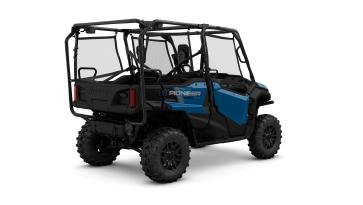
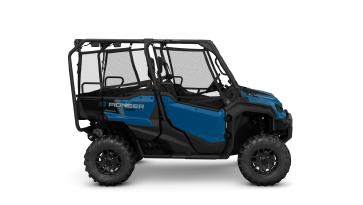
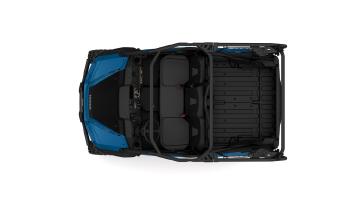
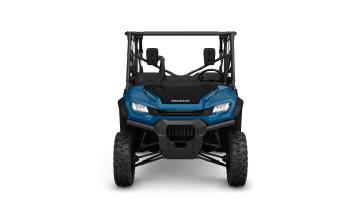
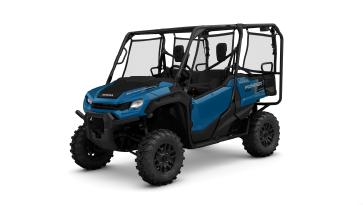
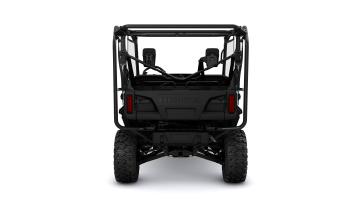
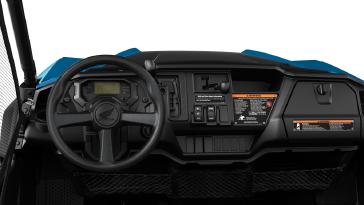
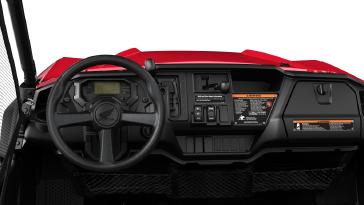
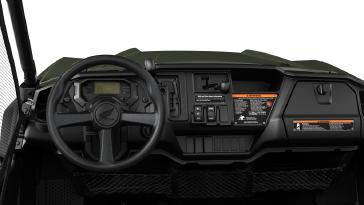
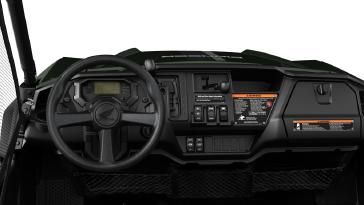
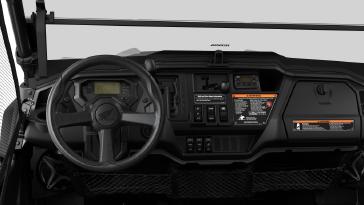
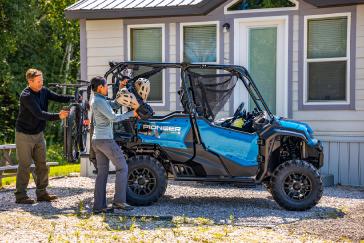
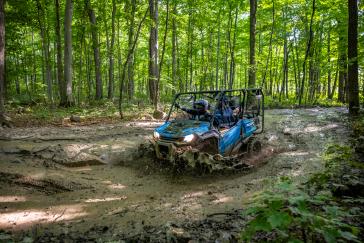
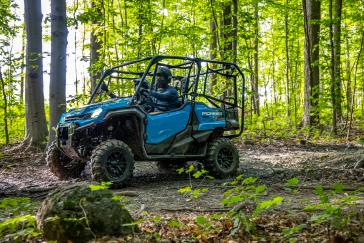
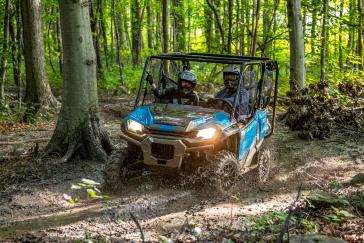
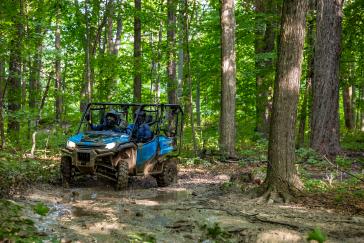
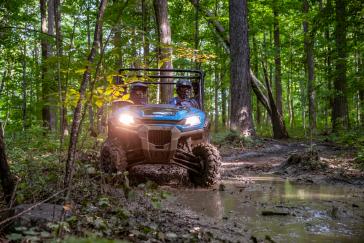
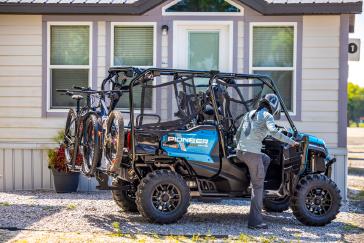
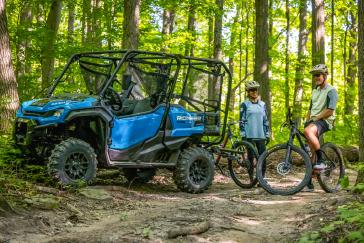
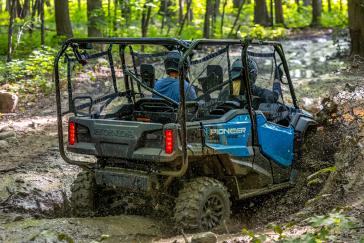
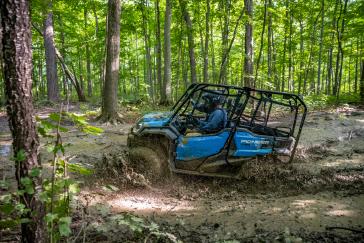
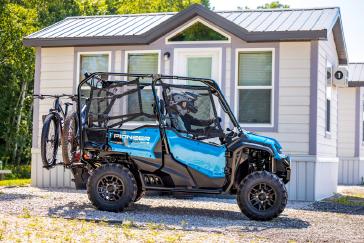
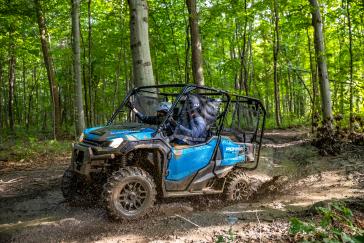
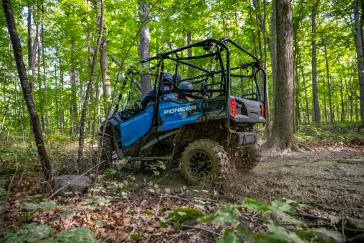
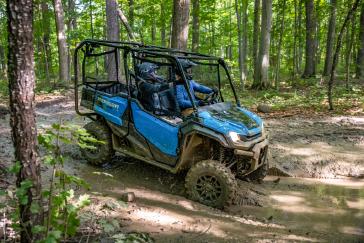
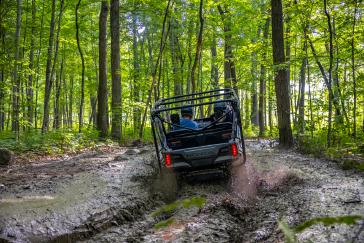
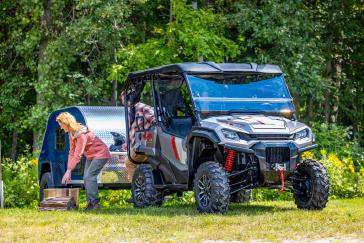
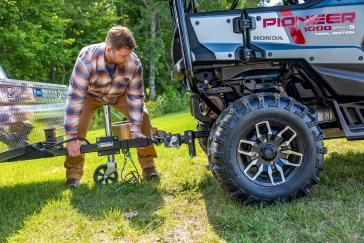
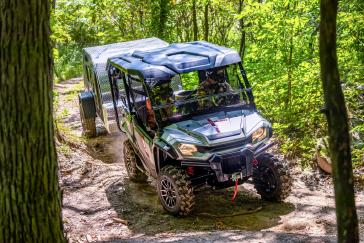
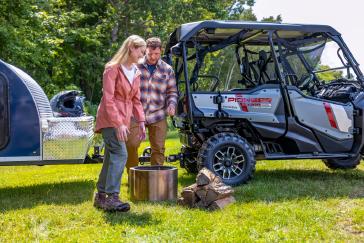
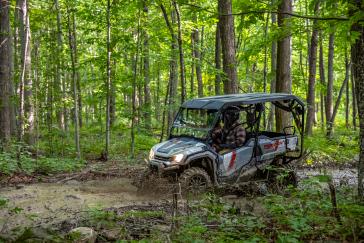
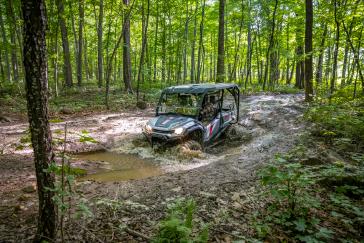
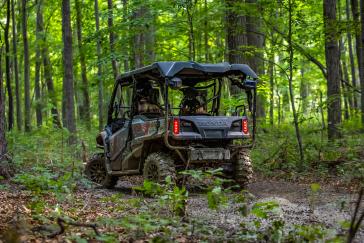
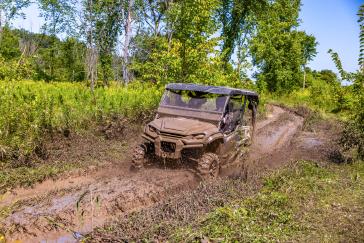
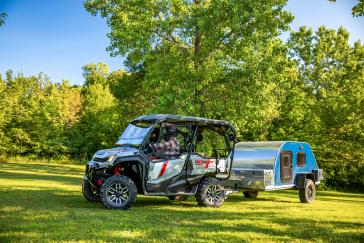
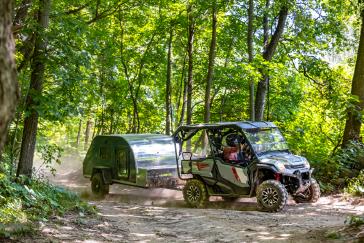
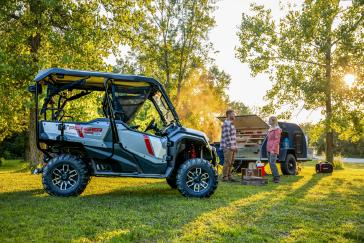
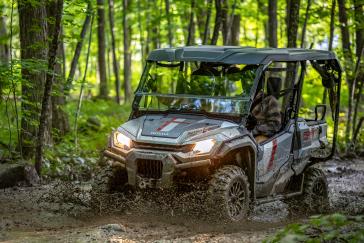
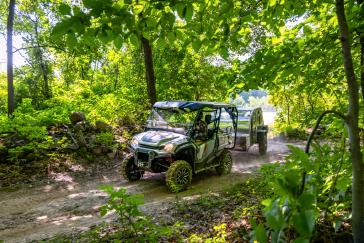
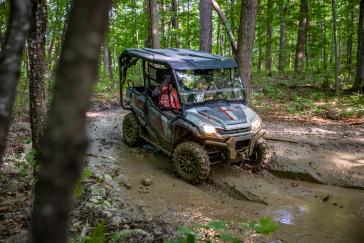
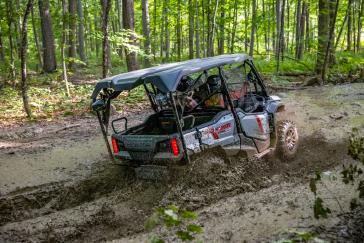
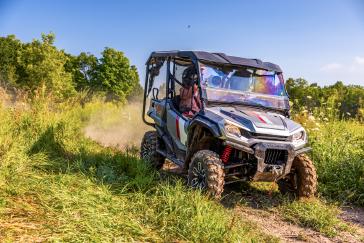
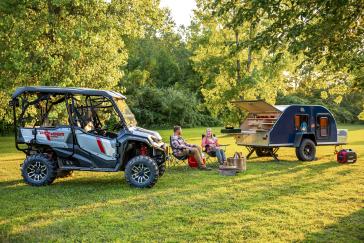
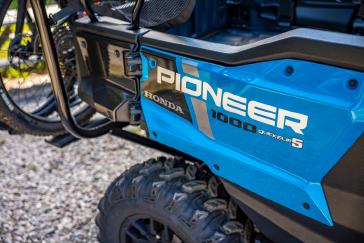
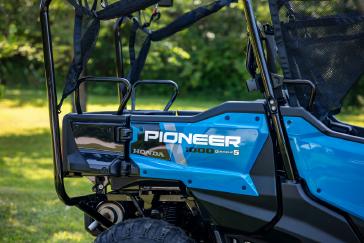
- Pioneer 1000-5 Trail Special Edition
- Pioneer 1000-5 Deluxe
- Pioneer 1000-5 EPS
- Pioneer 1000 Trail
- Pioneer 1000 Forest
- Pioneer 1000 Deluxe
- Pioneer 1000 EPS
Honda's flagship multipurpose side-by-side platform, the Pioneer 1000 offers a version for every off-road application. Available in seven unique configurations, the model represents the culmination of nine years of high-end rec/utility engineering.
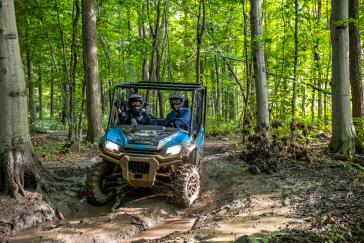
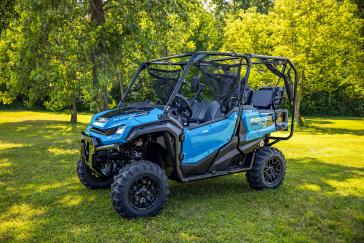
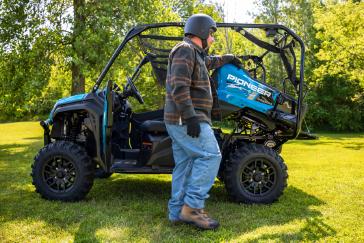
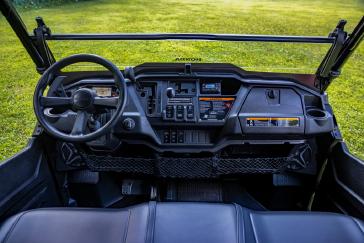
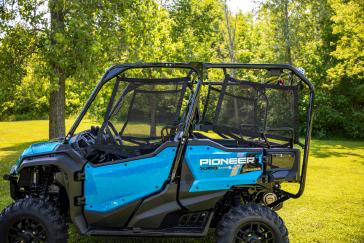
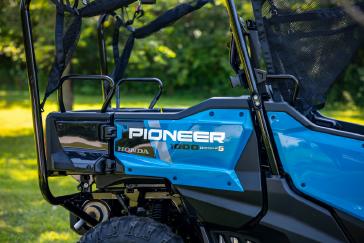
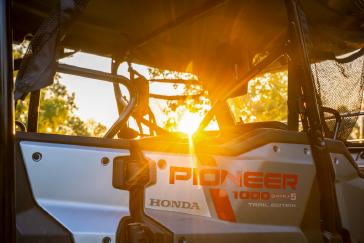
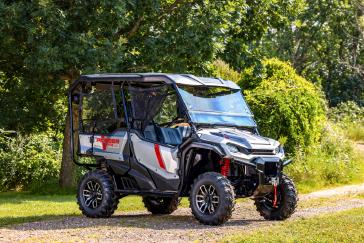
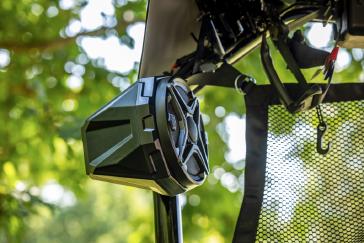
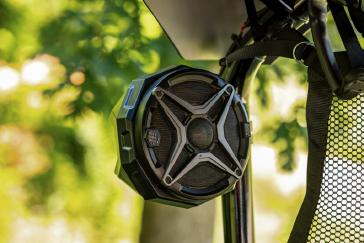
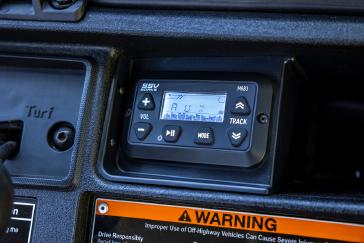
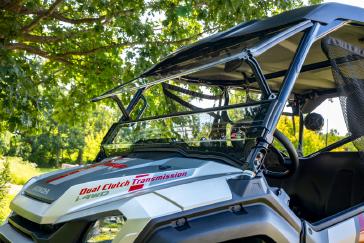
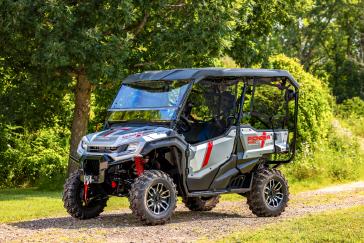
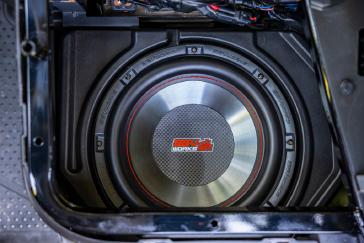
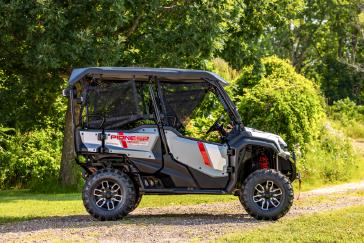
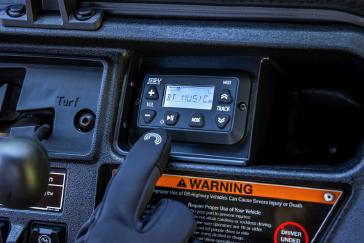
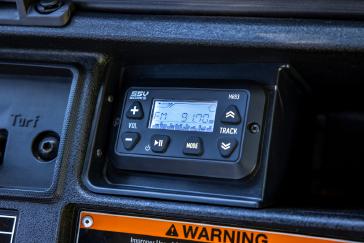
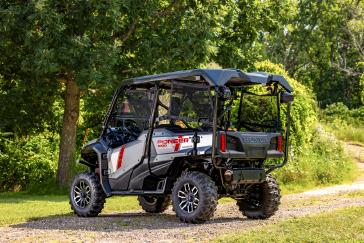
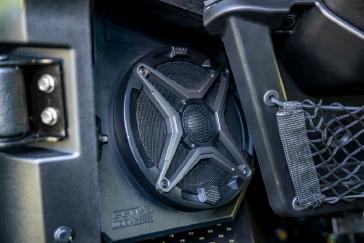
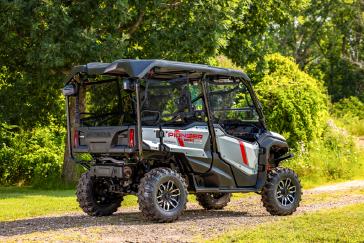
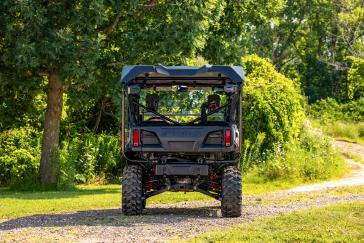
New for 2025, the Pioneer 1000-5 Trail Special Edition version has the power and performance of its siblings, but also comes with a host of factory-installed accessories, offering the benefits of customization right off the showroom floor. For example, Trail Special Edition owners can enhance their trail experience with their favorite tunes, courtesy of a weatherproof audio system that's Bluetooth compatible and operated via a dashboard media controller. A roof and two-piece windscreen also come installed on this version.
The rest of the Pioneer 1000 lineup continues to be as popular as ever. For those who use their side-by-side for hunting, fishing or other outdoor experiences, the Forest delivers, offered in TrueTimber's® Atera camo pattern. Developed in partnership with the camouflage-industry leader, this pattern is exclusive to Honda in the powersports world. The remaining members of the Pioneer 1000 family are the versatile Deluxe and the cost-effective Pioneer 1000 EPS (both available in three- and five-seat versions), both of which embody Honda's legendary quality and reliability.
HISTORY
Honda's original side-by-side was the Big Red utility vehicle (2008-'13), but the rec/utility Pioneer family was born in 2014, with the debut of the Pioneer 700. That was followed a year later by the Pioneer 500, with the flagship Pioneer 1000 platform entering the scene in 2016.
Consistently available in two primary configurations—a three-seat version and a five-seat version with two rear seats that fold into the bed when not in use—the Pioneer 1000 has also been offered with various levels of trim, including Deluxe versions and Limited Editions. The platform has undergone significant updates and improvements over the years, including the addition of i-4WD. The 2022 model year saw the addition of specialized Trail and Forest versions, each of which came standard with preinstalled accessories to better suit them for specific applications, and the 2023 model year brought an all-new six-seat iteration—the Pioneer 1000-6 Deluxe Crew. For 2025, a new special-edition five-seat Trail Special Edition version has been added.
TRIM LEVELS
Honda offers the Pioneer 1000 in the following four trim levels, each of which is available in both three- and five-seat versions, for eight different choices to satisfy every need:
- Pioneer 1000-5 Trail Special Edition: Honda's first four-wheel powersports product to be offered with a factory-installed audio system, this new five-seat “special edition” version is great for customers who like to relax on the trails while listening to their favorite music. Powered by a 50-watt x 4 channel amplifier, the SSV Works system includes an audio head unit (featuring Bluetooth connectivity and AM/FM radio), a power block, an under-seat 10-inch subwoofer, and 6.5-inch, 195-watt front-and-rear speakers. The Trail Special Edition also comes standard with a hard roof and two-piece windscreen.
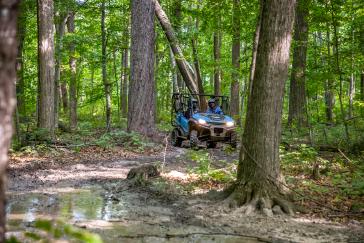
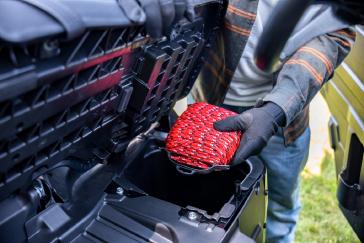
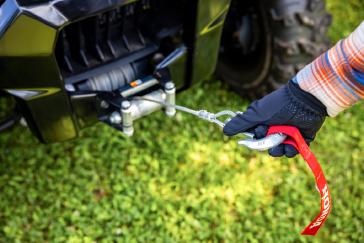
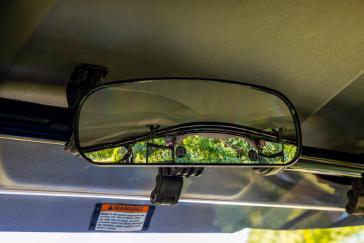
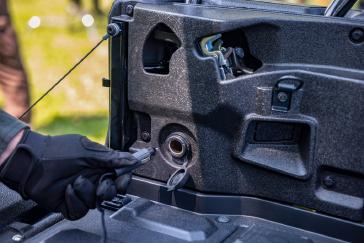
- Pioneer 1000 Trail: To facilitate enjoyment of the outdoors with friends and family, the Trail three-seater features FOX Quick Switch 3 shocks, as well as aluminum cut-contrast wheels. A ROPS-mounted rear-view mirror is standard for keeping track of other drivers and to facilitate reverse maneuvers. A winch is standard, and an in-bed accessory outlet is provided as well. The Trail version also comes with Honda's high-tech i-4WD system.
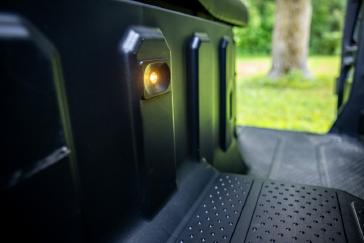
- Pioneer 1000 Forest: To ensure passage through rugged conditions, the three-seat Forest version comes standard with a winch, and black-aluminum wheels look good even in the dirtiest conditions. Standard dual bed lights make finding gear easier in low-light conditions, and an in-bed accessory outlet allows use of electrical devices. Self-leveling rear suspension adjusts to different cargo loads, and i-4WD is standard. The Forest version also comes with a full front bumper, and it features TrueTimber's Atera camo pattern.
- Pioneer 1000-5 & 1000 Deluxe: Designed for maximum versatility, the Deluxe versions have black aluminum wheels. An in-bed accessory outlet is provided, and the five-person version comes with self-leveling rear suspension.
- Pioneer 1000-5 & 1000 EPS: Keeping value front-of-mind, Honda outfits the three-seat and five-seat standard version with steel 14-inch wheels.
DESIGN / STYLING
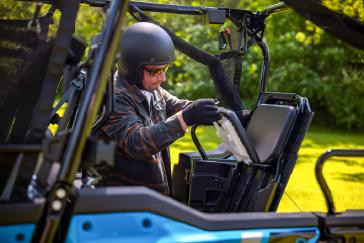
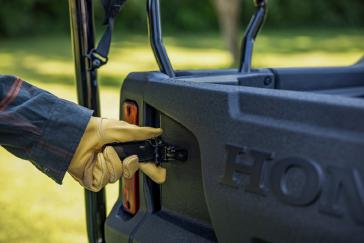
The Pioneer 1000 boasts modern, aggressive styling as well as comfort-focused features that enhance the driving experience. To suit drivers of different sizes, all versions come with tilt steering-wheel adjustment and a thickly padded foam seat for maximum comfort in all driving conditions.
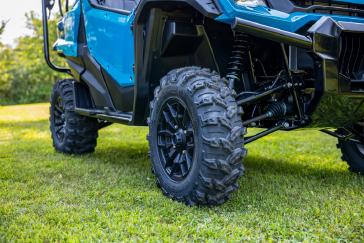
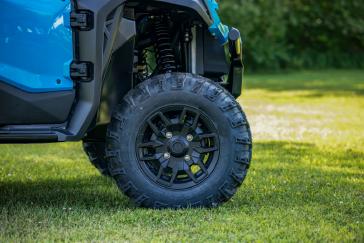
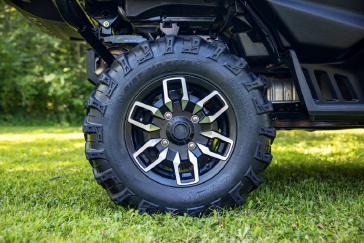
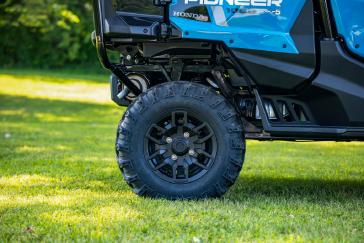
All Pioneer 1000 versions come with six-ply OTR Dirt Master tires mounted on 14-inch wheels (cut-contrast aluminum for the Trail, black aluminum for the Forest and Deluxe, steel for the standard), and halogen headlights are standard, providing superb illumination when the sun goes down.
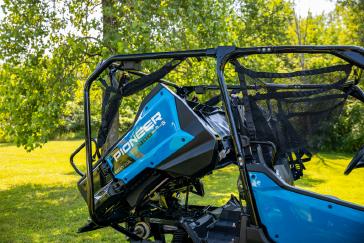
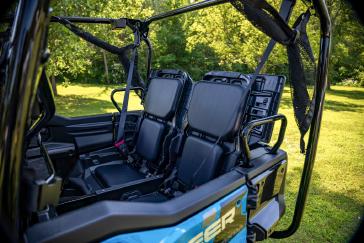
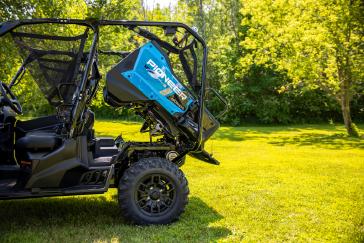
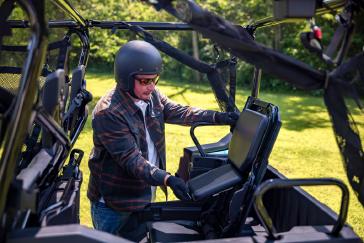
The five-seat iterations are equipped with Honda's exclusive QuickFlip® seat system, which enables users to switch between seating arrangements for three, four or five people. When the two rear seats aren't needed, they can be folded down to allow additional room in the bed for cargo. Bed capacity is 1,000 lbs. (600 lbs. in California), and fuel-tank capacity is 7.9 gallons, including reserve (1.2 gallons for five-seaters, 1.7 gallons for three-seaters).
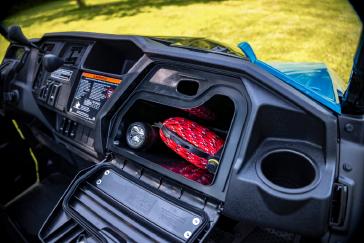
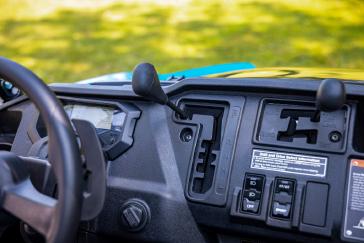
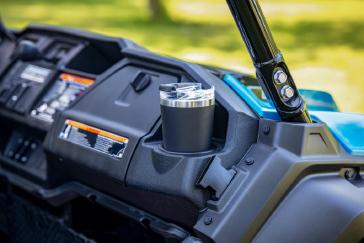
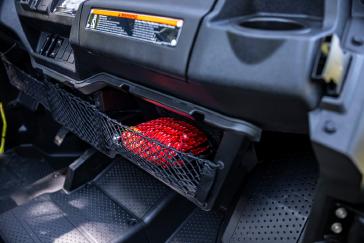
Door nets help to prevent branches and debris from entering the cab, and their fine mesh pattern allows for good visibility. The black-on-white digital dash display has a modern appearance and features indicators for clutch engagement and battery voltage. There are four door-mounted cupholders, and the large dash cupholder holds a tumbler-style container up to 30 ounces in size. The Pioneer 1000 Trail comes with a ROPS-mounted rear-view mirror, while the other versions have a bracket for easy installation of an accessory mirror.
As indicated above, the three-seat Forest version comes in TrueTimber's Atera camo pattern.
ENGINE / DRIVETRAIN
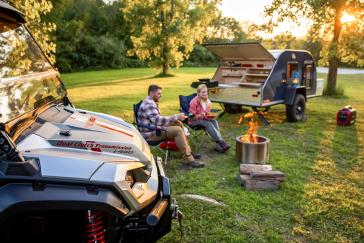
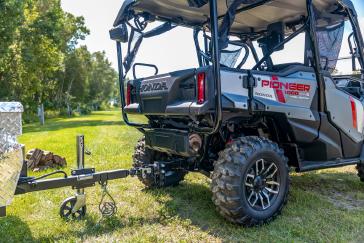
All iterations of the Pioneer 1000 are powered by a 999cc liquid-cooled parallel-twin four-stroke engine with a Unicam cylinder-head arrangement and four valves per cylinder. With the combination of strong midrange horsepower and smooth delivery, the Pioneer 1000 has impressive acceleration and a 2,500-pound towing capacity.
Also used in Honda's legendary CRF motocross models, Honda's Unicam design utilizes lightweight “roller rockers” that are activated by the camshaft and in turn operate the valves. A roller contacts the cam, minimizing friction and wear compared to standard rocker arms. The design produces significant horsepower and torque and also allows reductions in overall engine size and weight. These factors make for a roomier cabin design and lower the vehicle's center of gravity, thereby improving handling.
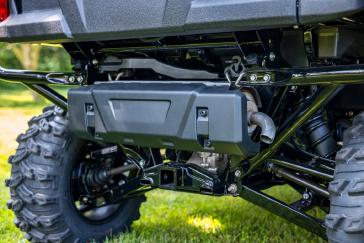
Longitudinal engine mounting eliminates unnecessary power-robbing right angles in the driveline, ensuring that more of the engine's output is transmitted to the wheels. The engine and exhaust system are rubber-mounted to reduce vibration and noise.
A large radiator fan and cabin shielding dissipate and deflect engine heat effectively, enhancing driver and passenger comfort.
Transmission
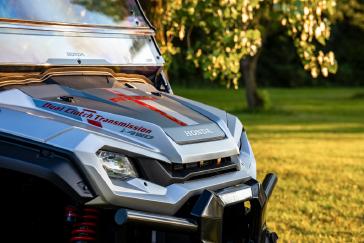
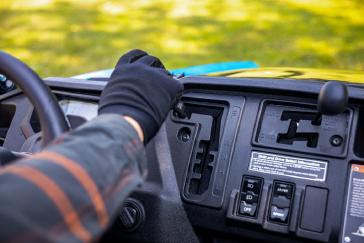
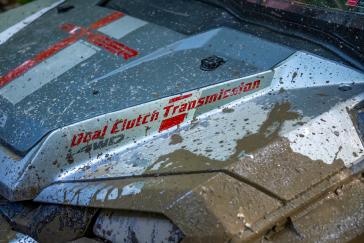
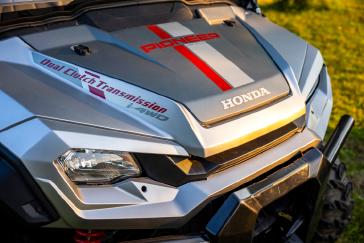
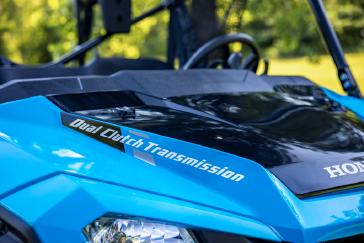
Honda's legendary automatic dual clutch transmission is standard on all Pioneer 1000 versions. DCT provides the durability and efficiency of a conventional manual transmission but can change gears automatically, upshifting and downshifting without driver input.
Functionally, the DCT has two coaxial main shafts and two automatic clutches, one for the odd-numbered gears (1/3/5) and one for the even-numbered gears (2/4/6). The digital programming monitors numerous variables, including throttle position, air temperature, air pressure, engine rpm, vehicle speed, brake input and driving style, then calculates when to shift.
For example, when the driver's input is relaxed, the DCT shifts at lower engine rpm for a quiet cabin, minimal vibration, optimal fuel efficiency, reduced drivetrain load and freer suspension action. With more aggressive driver input, higher engine speeds are maintained before shifting, maximizing engine torque and power. When descents are detected, the transmission downshifts to provide confidence-inspiring engine braking. Over the years, Honda's engineers have fine-tuned the DCT's algorithm, for example to minimize the shock imparted by the hydraulic controls, for enhanced occupant comfort.
Two automatic shifting modes allow the driver to tune the driving behavior of the Pioneer 1000, with Sport mode executing gear changes at higher rpm than Standard mode. The former mode is more dynamic, the latter more relaxed.
Drivers also have the option of selecting Manual mode and making gear changes via paddle shifters mounted on the steering column. (The paddle shifters can also be used to force gear changes while driving in automatic modes, for example to initiate engine braking when approaching a corner.)
A notable convenience is the Pioneer 1000's DCT memory function, which returns the transmission to the most recent drive mode when resuming forward motion after reverse is engaged.
Engine power is routed through the DCT to the wheels via direct front and rear driveshafts. All Pioneer 1000 versions come standard with Honda's torque-biasing, limited-slip differential. Turf Mode utilizes two-wheel drive and the limited-slip rear differential to protect lawns and other sensitive surfaces.
Technology
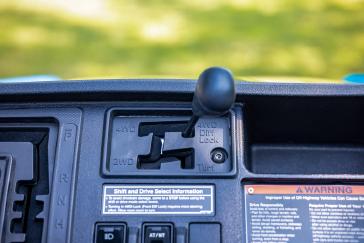
First introduced in 2017, Honda's exclusive i-4WD system (“intelligent four-wheel drive”), is standard equipment on Pioneer 1000 Trail and Forest versions. This ingenious system is a combination of brake traction control and torque-biasing, limited-slip front differential, managing the four-wheel-drive and differential-locking functions into a single selection mode, resulting in unparalleled benefits.
With conventional, open four-wheel drive, when one of the front wheels loses traction and starts spinning, the system limits power and torque to both front wheels—including the one that still does have traction. But with i-4WD, brake-traction control manages the amount of slip between the left and right front wheels, automatically detecting wheelspin and stopping it by applying brake pressure to the offending wheel. The torque-biasing, limited-slip front differential mechanically multiplies the brake force 3.92 times and delivers it as drive force to the wheel with more grip. The result is the optimized front-wheel traction of a locked front differential, with the added benefits of reduced steering effort, minimal kickback, better high-speed tracking and tighter turning radius compared to standard, open front differentials. Add in the Pioneer's locking rear differential, and it's the best of all worlds. In summary, i-4WD provides a much more relaxed driving experience—and of course there's no need to stop and engage a locking differential.
The i-4WD system has the added benefit of allowing electronic brakeforce distribution technology. When the driver applies the brake abruptly or in limited-traction conditions, the system automatically proportions brakeforce to the wheels with the most grip, reducing skidding. The wheels that can use more brakeforce get it, and the wheels without as much braking effectiveness receive less. Since the system works so quickly, it even automatically reproportions brakeforce as weight distribution changes during a stop. This is a considerable benefit given the changing traction dynamics of rough trails and differing loads, and it's one that locking differentials don't offer.
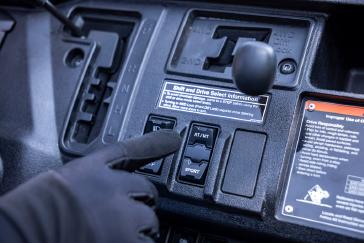
To simplify re-starting after stops on ascents, the driver has the option of pressing a Hill Start Assist button (HSA) on the dash, thereby momentarily continuing to apply brakeforce (and eliminating vehicle rollback) while the driver's foot is moved from the brake pedal to the accelerator. As a result, more mental bandwidth can be dedicated to smoothly modulating the throttle to resume motion—a benefit that is especially welcome when carrying heavy loads, or when towing ta trailer. The system even works in reverse if the driver needs to back up a hill.
CHASSIS / SUSPENSION
All Pioneer 1000 iterations have an 80.2-inch wheelbase and a 13.8-foot turning radius.
Suspension
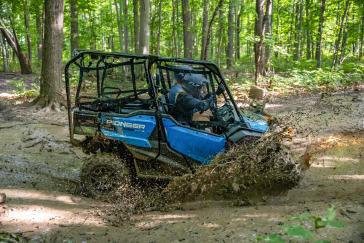
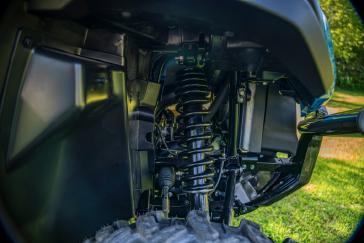
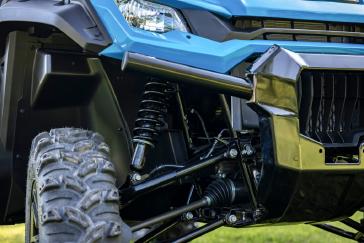
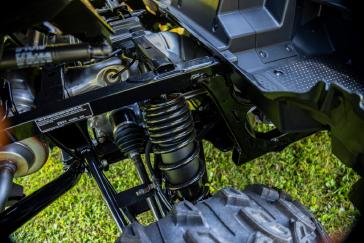
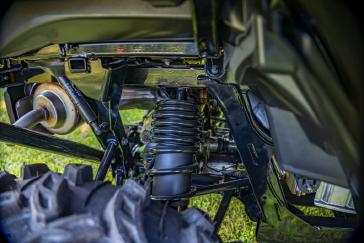
While vehicle ground clearance varies between trim levels, fully independent, long-travel, double-wishbone front and rear suspension is standard across the entire platform. Suspension travel is 10.6 inches in front, 10.0 inches at the rear.
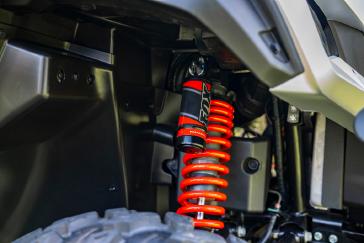
- Pioneer 1000-5 Trail Special Edition & 1000 Trail: For high-performance handling during dynamic driving, the sporty Pioneer 1000 Trail three-seater and Pioneer 1000-5 Trail Special Edition five seater have adjustable FOX Quick Switch 3 Shocks, tuned to provide excellent handling across a broad range of conditions. The shocks have a simple dial to selectively tune the compression and rebound settings for differing terrain and driving styles.
- Pioneer 1000 Forest: To adapt to varying loads (for example, when an eight-point buck doubles the cargo weight for the drive out of the woods back to the truck), the three-person Pioneer 1000 Forest features a self-leveling rear suspension design that automatically maintains the appropriate ride height. Front shocks are KYB, while rear are ZF Sachs. Dual-rate front springs provide progressive control.
- Pioneer 1000-5 & 1000 Deluxe: Like the Forest, the Deluxe has KYB front shocks with dual-rate springs. The Deluxe also has triple-rate rear springs, and the five-person version features self-leveling rear suspension. (The three-seater has rear shocks with adjustable preload.)
- Pioneer 1000-5 & 1000 EPS: The value-conscious standard version has KYB front shocks with dual-rate springs. The five-person version has adjustable preload rear shocks with dual-rate springs, whereas the three-person version has no rear preload adjustability.
Brakes
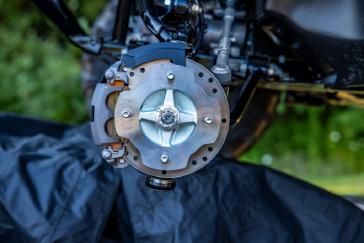
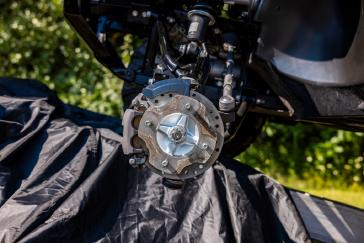
Braking chores are handled by sure-footed, confidence-inspiring hydraulic disc brakes with 210mm rotors on all four wheels.
Electric Power Steering
EPS is standard across the Pioneer 1000 lineup. The ECU-controlled system monitors vehicle speed, steering input from the driver and the steering shaft angle. The system then fine-tunes feedback to the driver, reducing driving fatigue. Steering effort is minimized, and the steering wheel centers efficiently following a cornering maneuver. When using four-wheel drive in challenging terrain, EPS significantly reduces harsh kickback.
Protection
Rec/utility side-by-side customers aren't known for babying their vehicles, and the Pioneer 1000 is ready to withstand hard use and rugged conditions. Durable driveshaft boots resist punctures and tearing, minimizing the chance that external debris can contaminate and damage costly bearings. In addition, a robust undercarriage skid plate reduces the risk of vehicle damage from rocks.
ACCESSORIES
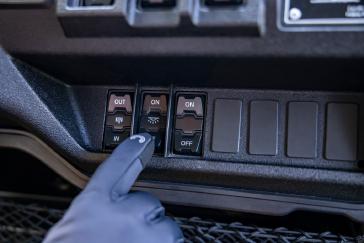
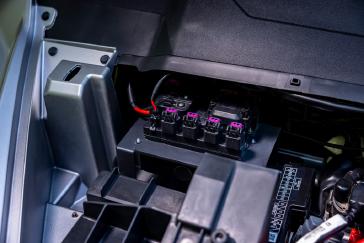
As capable as the Pioneer 1000 is, Honda knows that side-by-side customers typically enjoy personalizing their vehicles to make them their own, and to outfit them for specific applications. With a dash switch panel and pre-wired accessory connector, installing accessories on the Pioneer 1000 has never been easier. There are over 90 Pioneer 1000 accessories.
WARRANTY: Transferable one-year limited warranty; extended coverage available with a Honda Protection Plan
- Meets current CARB and EPA off-road emissions standards
- Recommended for riders 16 years of age and older