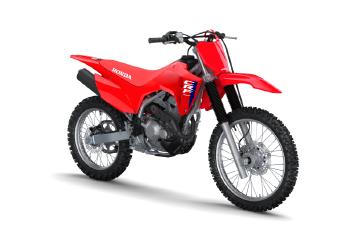
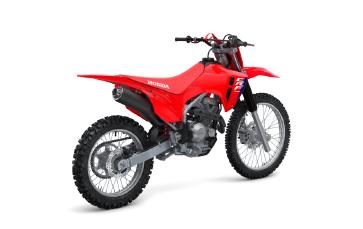
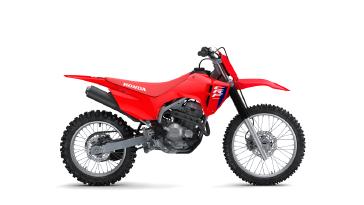
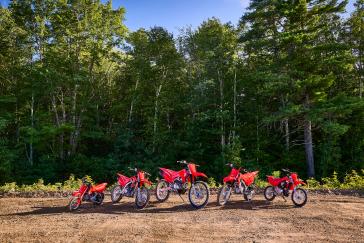
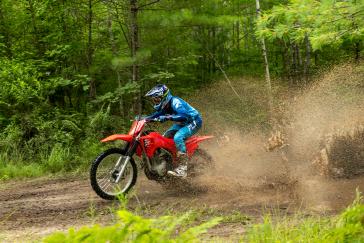
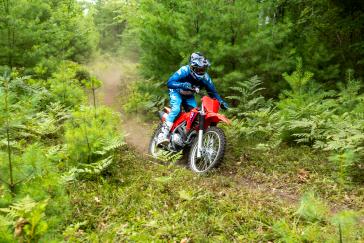
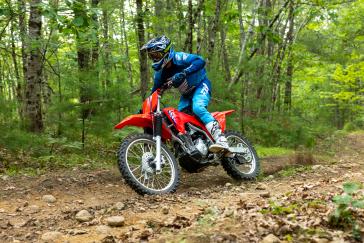
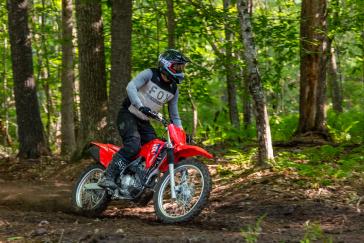
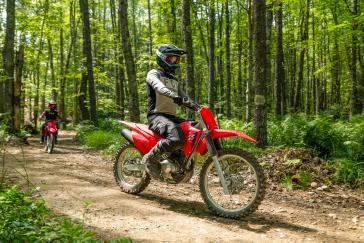
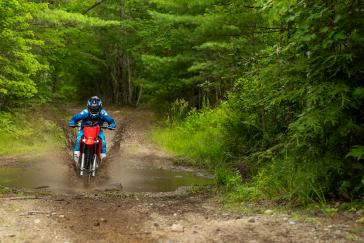
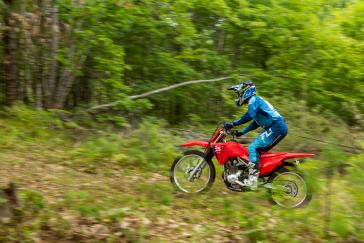
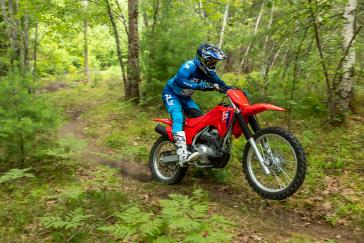
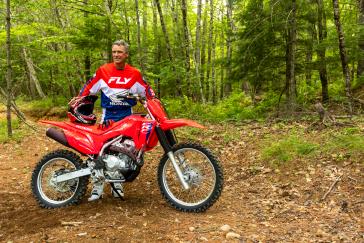
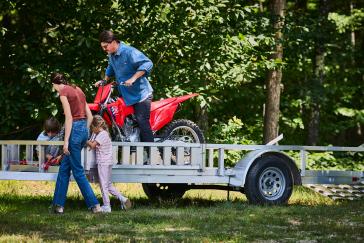
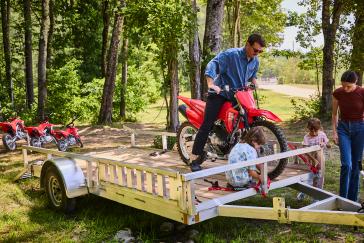
When it comes to recreational off-road motorcycling, no brand does it better than Honda, which has a long record of producing wildly popular trailbikes. That has been the case for the brand’s largest CRF-F model—the best-selling machine in its class thanks to its reliability, value and fun, friendly performance. Now, a new engine with 18-percent more displacement results in increased power for the new CRF300F, but not at the expense of a smooth, predictable delivery that is appropriate for newer riders. Also new for the 2026 model year are chassis improvements focused on performance and reliability, making the CRF300F a great option for a wide variety of off-roaders, whether they’re stepping up from youth models or just getting started as adult riders.
HISTORY
The largest model in Honda’s line of trail-oriented family of CRF-F models was originally the CRF230F, first offered for the 2003 model year as a replacement for the venerable XR200R. Popular for its dependable, reliable performance, the model was relatively unchanged until 2019, when it was replaced by the CRF250F, which featured not only increased displacement, but four valves (up from two) and Keihin electronic fuel injection—vital for 50-state off-road-legal status. The chassis was updated as well, with centralized mass, upgraded Showa suspension and a perimeter steel frame for improved handling. For the 2026 model year, the model is replaced with the CRF300F, offering not only increased power, but also improved handling.
NEW FOR 2026
- New engine, with a 44cc displacement increase compared to the CRF250F.
- Transmission has six speeds (compared to the CRF250F’s five), providing increased versatility.
- New oil cooler boosts reliability in hot conditions.
- Clutch discs have a new material, for better heat resistance.
- New exhaust header and muffler with larger internal diameter, to match the engine’s increased power.
- Rear-suspension link is now aluminum instead of steel, for weight savings and improved rear-suspension performance.
- New fork settings for improved handling and comfort, and better resistance to bottoming.
- New, smaller-diameter hydraulic front-brake line is lighter.
- Bottom triple clamp is now aluminum instead of forged steel, for improved strength and handling.
- Revised engine-hanger shape, for improved handling and feel.
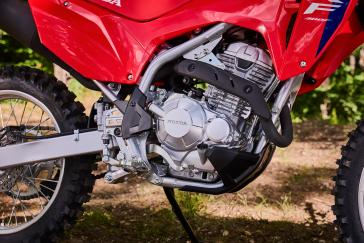
- Skid plate has a revised shape to protect the oil line on the new engine.
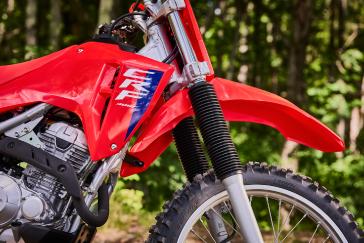
- New radiator shrouds, with updated styling.
- The rear mounting points for the side panels now use screw-type fasteners, for a more secure attachment than rubber-grommet mounts.
- The angle on the side stand is changed for improved function.
DESIGN / STYLING
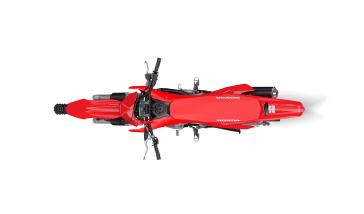
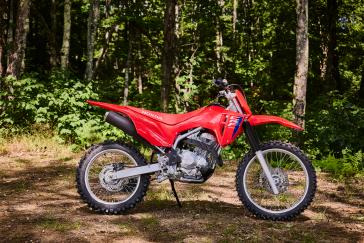
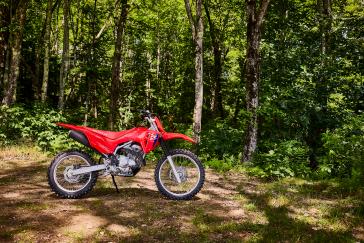
Designed with modern aesthetics, the CRF300F features bodywork and graphics inspired by those of the CRF Performance line. For 2026, the radiator shrouds have revised shapes for an eye-catching look. In addition, the side panels fit more securely, thanks to an updated rear mounting system (switching from a rubber-grommet type to a screw fastener). Rubber boots protect the fork legs, the plastic skid plate is reshaped to protect the new engine’s oil line, and nylon guards protect the frame where the rider’s boots make contact.
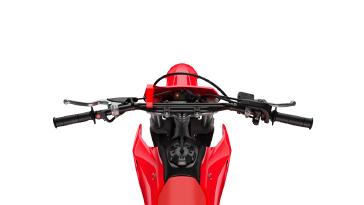
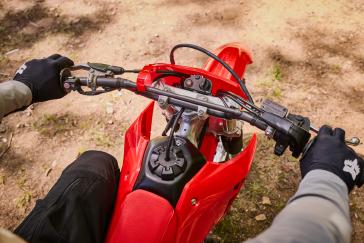
The steel handlebar has a crossbar, the half-waffle grips are comfortable for hands of varying sizes, and the front brake lever is adjustable to accommodate a variety of hand sizes. A handlebar-mounted multifunction switch includes the starter button, ignition indicator, fuel-injection system status and a low-fuel light that illuminates when only .3 gallons remain. The CRF300F comes standard with a side stand for convenient parking between rides or during trailside breaks; for 2026, the angle of the stand has been updated for improved operation.
ENGINE / DRIVETRAIN
Honda’s largest trail bike is powered by a new air-cooled, single-cylinder, four-valve, overhead-cam, four-stroke engine with convenient push-button electric start. Compared to the engine on the outgoing CRF250F, the CRF300F’s is 44cc larger (294cc compared to 250cc), delivering impressive power and torque while retaining a sooth, linear delivery. The bore is 6mm larger than that of the CRF250F (77.0mm compared to 71.0mm), while stroke is identical at 63.0mm. The compression ratio is 9.3:1 (compared to 9.6:1).
As before, the model features a Keihin electronically controlled fuel-injection system that delivers smooth power and easy start-up, whether the bike has been sitting or is warm from riding. A new six‑speed transmission (compared to five on the CRF250F) provides a gear for every situation—from low‑speed technical riding to dirt‑road cruising—while upgraded clutch discs with a heat‑resistant material improve durability. An oil cooler has also been added for 2026, boosting reliability in hot conditions.
Matching the more powerful engine is a new exhaust header and muffler, with a larger internal diameter; as before, the routing helps to centralize mass, for optimized handling. The exhaust note is quiet, and a spark arrestor is standard. The CRF300F meets EPA and CARB off-road emissions standards and is green-sticker legal in California, meaning that it can be operated year-round in off-road parks across the country.
CHASSIS / SUSPENSION
The CRF300F’s vehicle-packaging approach follows the CRF Performance Line philosophy of mass centralization, and the model has a tough tubular-steel frame that delivers stability and nimble handling. Compared to the CRF250F, the engine hanger has a revised shape, for improved handling and feel.
The wheels are full-size (21-inch and 18-inch front and rear, respectively), and ground clearance is 11.4 inches—plenty for clearing nasty trail obstacles. The wheelbase is 55.8 inches, and the curb weight (including all fluids and a full tank of fuel) is 273 pounds. Rake and trail are 25.7º and 100mm, respectively. The fuel tank holds 1.6 gallons.
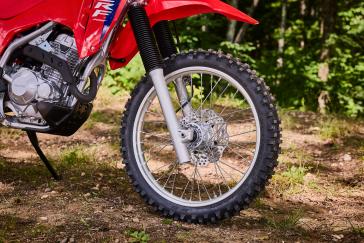
The 41mm conventional telescopic fork has 9.5 inches of front-wheel travel. Compared to the CRF250F, the fork has new settings based on customer feedback, resulting in improved handling and comfort, in addition to more resistance to bottoming. The bottom triple clamp is now aluminum instead of forged steel, for improved strength and handling (the top triple clamp was already aluminum).
The Pro-Link® single-shock rear-suspension system delivers 9.1 inches of wheel travel, and the link is now aluminum instead of steel, for weight savings and improved performance.
Smooth, reliable stopping power is provided by hydraulic brakes front and rear, with rotor sizes of 240mm rotor and 220mm, respectively; the rotors feature a petal design, for excellent heat dissipation. The hydraulic front-brake line is now smaller in diameter, reducing weight.