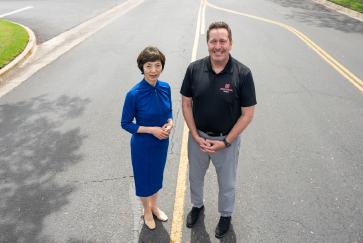
A first-of-its-kind pilot project led by the Ohio Department of Transportation (ODOT) and Honda has demonstrated how analyzing real-time vehicle-generated data can reduce the cost of road maintenance and create safer roadways. Brian Bautsch, director of Safety Strategy for Honda, and Sue Bai, the Honda chief engineer who initiated the project, recently had a conversation about the future potential of this initiative.

Brian:
The prototype Honda Proactive Roadway Maintenance System is an exciting development because, while research consistently shows that human behavior is a key factor in most traffic fatalities, this pilot project demonstrated how people can be part of the solution to creating safer roads. Sue, we’re really proud of your efforts. What was the idea that led to this collaborative program?
Sue:
Imagine a future where crowd-sourced data about road conditions will empower drivers to play an active role in creating safer and well-maintained roadways in their own communities. Our founder Mr. Honda taught us that the purpose of technology is to help people. We simply asked ourselves, what if we could use the technology in our vehicles – sensors that already exist in our safety and driver assistance system on the road today – to make drivers part of the solution? By asking a different question, we provided drivers with a meaningful way to help.
Brian:
Reframing this is really at the heart of what we're trying to do. And it connects to something I've come to believe after spending over 20 years as a safety engineer. Here is what I know for certain: we can’t achieve zero fatalities through technology alone. We recognize that, to achieve Safety for Everyone, we need to work with everyone. Only in this way can we augment safety awareness to influence driver behavior and improve the traffic safety ecosystem by working with government, industry and community partners.

This pilot project in Ohio adds a new dimension to what this looks like: with Honda, ODOT and its smart mobility hub DriveOhio, alongside technology partners i-Probe Inc., Parsons, and the University of Cincinnati, all treating road safety as a shared infrastructure problem — and building a system that requires all of them to function together.
Sue:
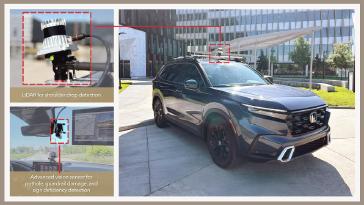
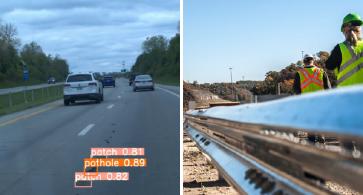
The results were significant. Using the sensors commonly used in ADAS — vision cameras and LiDAR — we were able to monitor approximately 3,000 miles of roads in central and southeastern Ohio to detect road deficiencies and identify necessary repairs in real time, including dangerous potholes, missing signs, damaged guard rails and other safety hazards.

The system achieved 93% accuracy for identifying damaged guardrails and 89% for potholes. When deficiencies were detected, AI-processed data flowed automatically to ODOT dashboards, where work orders were generated and prioritized by the severity of the issue — without a crew needing to drive around to look for problems. Our project team estimates that scaled deployment could save ODOT more than $4.5 million a year!
Brian:
Beyond the efficiency of repairs, timely maintenance produces better safety outcomes. Consider what this means for the safety of everyone sharing the road. A pothole detected in real time is a pothole repaired before it blows a tire. A guardrail flagged today is one that's protecting drivers next week.
Sue:
It also protects the people performing road work. On average more than 100 workers die each year performing roadside maintenance. In Ohio, I once watched a road worker climb down to inspect a guardrail on a two-lane road, with no shoulder and trucks passing just a few feet away.

Our system detects that damage automatically, reducing the safety risk of manual inspection and ensuring that road worker can go home to his family that night. These benefits are tangible, and the anonymous data gathered from our customers while they drive down the road is helping everyone who shares it.
Brian:
That's exactly why we're working to take this further. We are now in active conversations with several states about expanding the proactive roadway maintenance system we piloted in Ohio to other transportation departments. That growth will depend on Honda owners choosing to share road condition data as they drive throughout the day. The goal is to give drivers a real stake in improving safety of the roads they travel every day. Sue, I know one of the questions we hear is about data. Can you speak to that?
Sue:
We know data sharing ought to be done mindfully, and our approach collects only what's necessary,
such as location and road deficiency detection. More importantly, our customers will control whether they participate at all.
We can imagine other manufacturers with similar safety and driver assistance technologies in their vehicles joining this effort in the future. The auto industry is working together with government to enable people to help people. Truly, Safety for Everyone with everyone.
# # #
Sue Bai, Ph.D.
Chief Engineer, Advanced Technology Research, Honda Development & Manufacturing of America, LLC
Director at Large, SAE International Board of Directors
Brian Bautsch
Director of Safety Strategy, American Honda Motor Co., Inc.