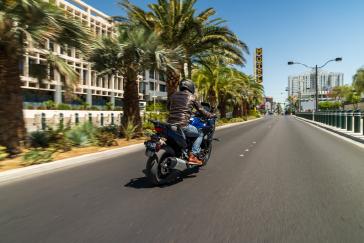
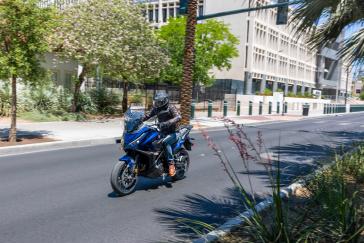
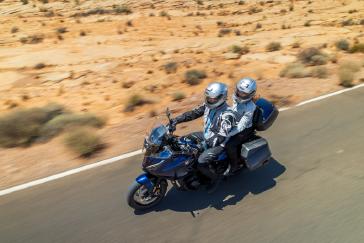
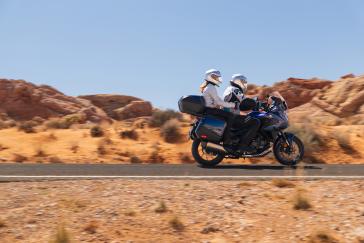
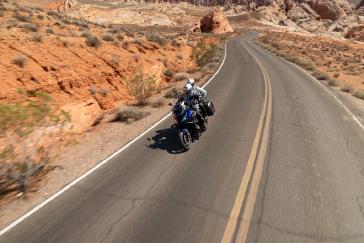
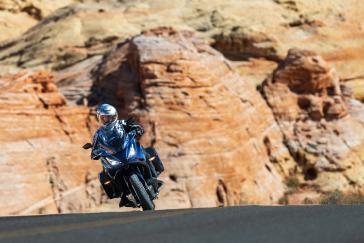
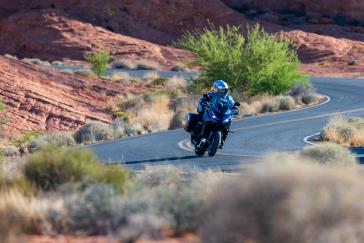
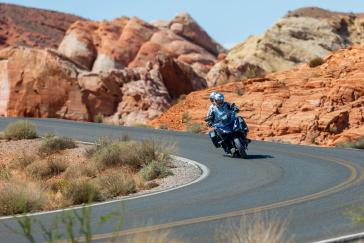
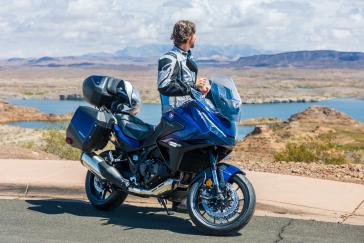
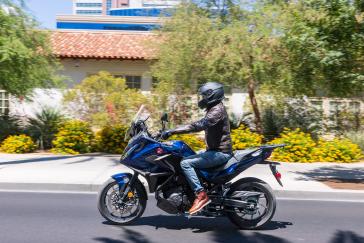
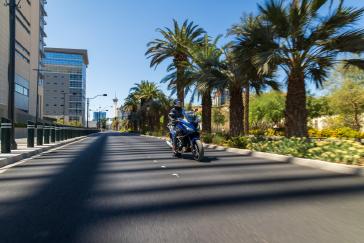
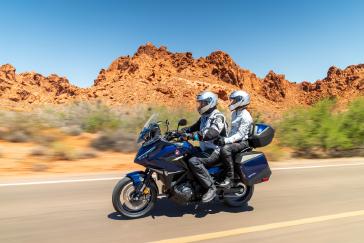
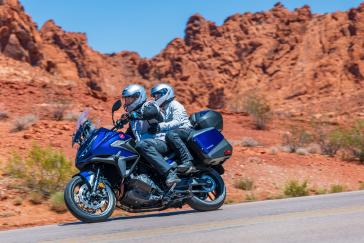
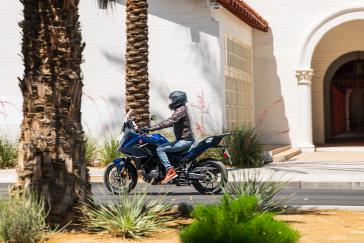
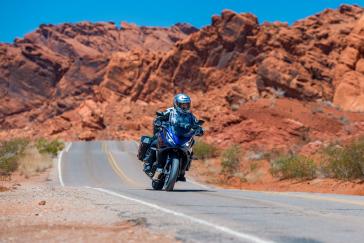
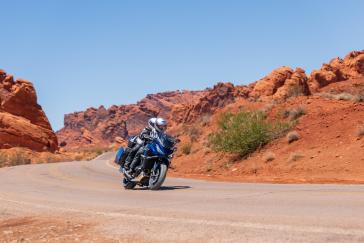
In a motorcycling landscape with a strong adventure-bike representation, the last decade has seen a limited number of choices available for riders looking for performance, handling, long-range comfort and technology, but not necessarily the image or physical dimensions of "ADV."
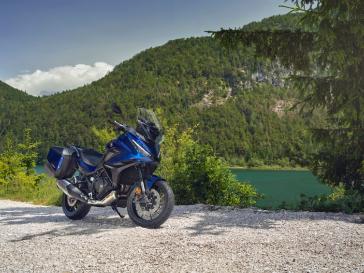
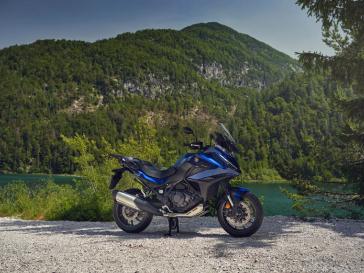
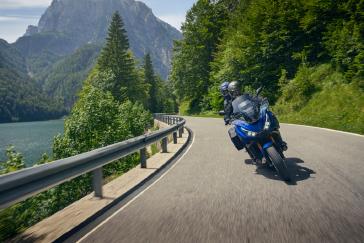
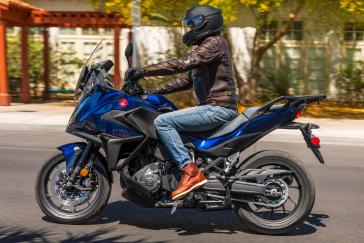
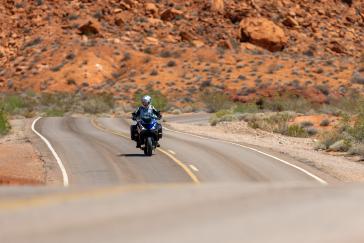
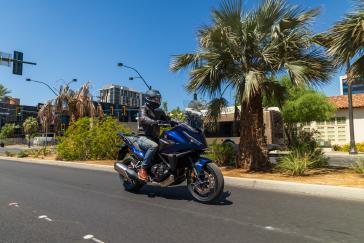
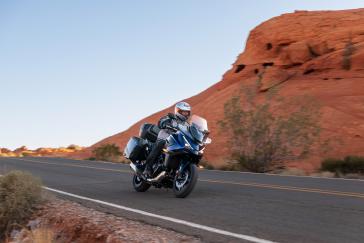
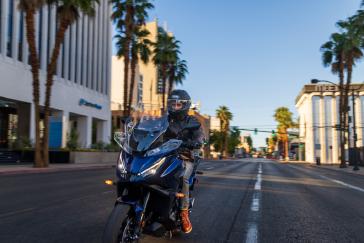
The NT1100 is a straightforward sport-touring machine, with a full feature list and a sporty edge to its performance—the sort of bike that deals with the weekday commute efficiently and is also ready for an extended tour, fully loaded. Designed to draw those with a memory of similar Honda machines from the past, but also to attract a much younger rider, it employs the frame and parallel-twin engine of the Africa Twin as a base, ensuring characterful, engaging performance, and it packs in features and technology that broaden any motorcycle's appeal.
HISTORY
The NT1100 defined a new breed of Honda tourer when introduced in Europe as a 2022 year model, offering comfort, agility and hugely enjoyable performance. With its combination of wide-ranging abilities and rich specification, already over 12,000 NT1100s have been sold, making it Europe's most popular sport-tourer in 2023.
For 2025, the NT1100 receives major upgrades to engine performance, practicality, and long-range comfort, and it is being offered to the U.S. market, where it looks set to cement its place in Honda's large range as one of motorcycling's ultimate all-rounders.
DESIGN / STYLING
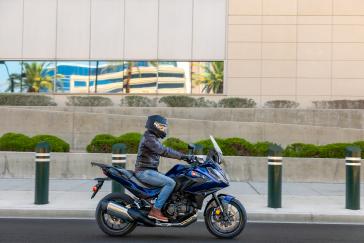
The NT1100 DCT was designed as a sporting, agile bike that's also enjoyable to ride all day, with efficient, protective aerodynamics and comfortable ergonomics, all centered around practicality, as well as rider and passenger comfort.
The premium specification is rounded out by self-canceling turn signals and standard 12V and USB auxiliary sockets. A center stand is standard.
Fairing
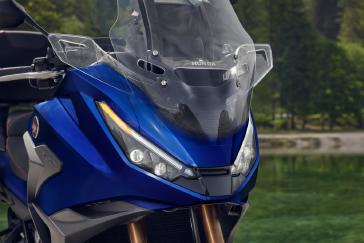
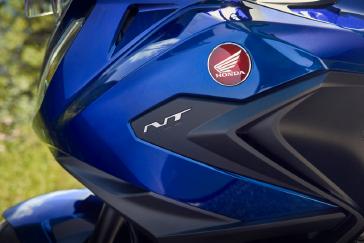
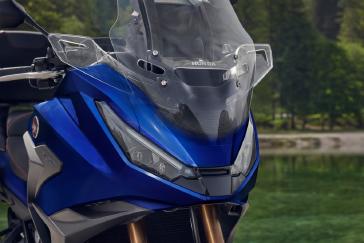
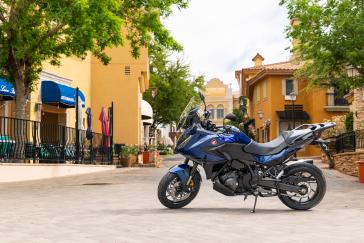
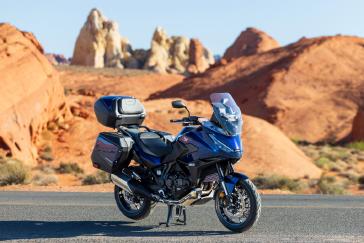
This motorcycle's form is also about function, with the aim of elevating the quality of the riding experience. The solid, three-dimensional upper fairing (partially constructed from biodegradable Durabio) has aggressive, tightly wrapped angles to both sides and "face," matched by a svelte tail section.
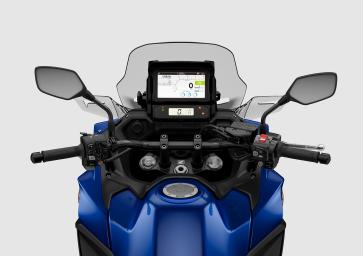
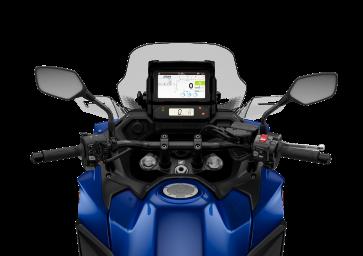
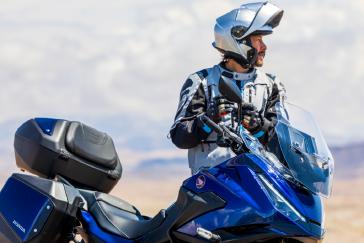
The rider can raise or lower the windscreen with one hand while seated on the bike. It offers five-stage adjustment for height and angle, through a total of 6.5 inches between the high and low positions. Set low, it sends air around the shoulders; set high it moves air over the rider's helmet.
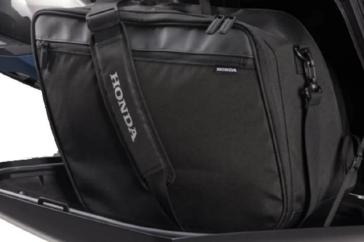
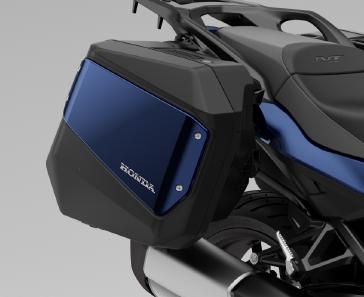
For protection from mud and water, the fender has a splash-guard extension covering the rear of the tire. The rider integrates into the machine neatly, enveloped by the protective fairing. The exhaust muffler is positioned low, to maximize pannier volume.
Lighting
The twin headlights comprise LED projectors, which incorporate subtle, integrated turn signals. Contrasting high/low beams express an intriguing "hidden eye." All other lighting is LED as well.
Cockpit
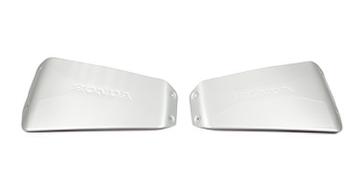
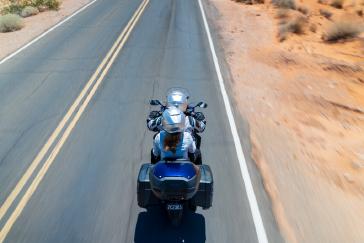
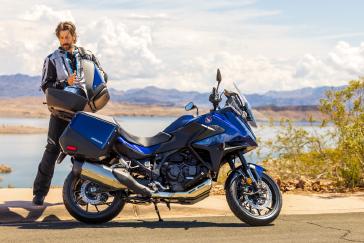
A wide, thick seat, with optimized cushion density for comfort, offers a luxurious expanse for two. Seat height is 32.3 inches, and a large grabrail for the passenger extends from the rear rack. Standard upper and lower deflectors provide wind and weather protection around the rider's arms and lower body.
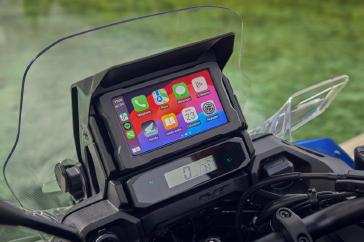
Bright and easy to read, the 6.5-inch TFT touch screen offers three choices of screen display; GOLD shows all numeric and mode information. SILVER centers on the speedometer and odometer, BRONZE on the odometer. The background color can be set to black or white. Apple CarPlay™, Android Auto™ and Bluetooth connectivity allows access to smartphone functions via the TFT display.
ENGINE / DRIVETRAIN
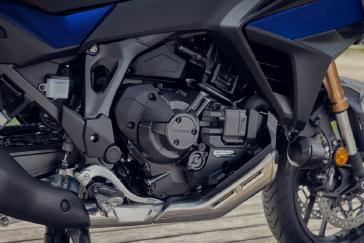
The NT1100 DCT's 1,084cc liquid-cooled parallel-twin engine is derived from that of the Africa Twin.
Aluminum cylinder sleeves keep weight low, while the 270° phased crankshaft and uneven firing interval create the engine's signature "throb."
The crankcases are split horizontally; the water pump is housed efficiently within the clutch casing, with a thermostat integrated into the cylinder head. The water and oil pumps are both driven by the engine's balancer shafts.
At the bottom end is a semi-dry sump, with in-tank lower-crankcase oil storage. This allows a lower pan depth, to keep overall engine height low. As the pressure-fed pump is located within the tank, from whence it delivers its oil, there is no need for a pressure-feed passage. Secondary vibrations are neutralized by the mutually reciprocating motion of the pistons, while primary inertial and coupling vibrations are canceled by use of biaxial balance shafts.
A crank pulsar—with relator teeth spaced at 10° intervals—manages misfire detection. An additional O2 sensor, positioned at the rear of the converter, gives more accurate emissions-measurement readouts. A high-quality Skyrich HJ13L lithium-ion battery minimizes weight and contributes to mass centralization.
Intake
Throttle-by-wire provides engine management, and PGM-FI feeds the throttle bodies. Throttle control is optimized for a linear power delivery.
The airbox has 33mm intake ducts, and 46mm throttle bodies feed the inlet ports. The bore and cylinder pitches are aligned to create a smooth air-intake profile. The injector angles deliver a direct spray into the twin-spark combustion chambers.
Valvetrain
Honda's single-overhead-cam Unicam valvetrain, and the low-set position of the cast camshaft contribute to the compact nature of the cylinder head and entire engine package. Inlet valves are 36.5mm in diameter and have 10.1mm of lift; exhaust valves are 31.0mm in diameter and have 9.3mm of lift.
Transmission
In the world of powersports, Honda first offered a dual-clutch transmission on the 2009 FourTrax Rancher multipurpose ATV, followed by the 2010 VFR1200F sport-touring motorcycle. Since then, the technology has been offered on Honda touring machines, cruisers, ATVs and side-by-sides. While similar systems can be found in high-performance sports cars, Honda pioneered the use of DCT in the powersports world and has accumulated experience and improved the technology along the way. For the NT1100’s introduction to the U.S. market, Honda is offering it with DCT technology.
DCT delivers consistent, rapid, seamless gear changes, and very quickly becomes second nature to use. It utilizes two clutches—one for startup and first, third and fifth gears, the other for second, fourth and sixth gears, with the main shaft for one clutch located inside that of the other. Each clutch is independently controlled by its own electro-hydraulic circuit. For a gear change to occur, the system pre-selects the target gear through the clutch not currently in use. The first clutch is then electronically disengaged as the second clutch simultaneously engages. As the twin clutches transfer drive from one gear to the next with minimal interruption to rear-wheel drive, gear-change shock and pitching of the machine are minimized, resulting in shifts that are not only smooth, but direct. The extra benefits of durability (as the gears are less likely to be damaged by missing a shift), low-stress urban riding and reduced rider fatigue add to the appeal of DCT.
On the NT1100 platform, Honda’s advanced automatic DCT technology benefits from the IMU, which allows cornering detection for optimized shift timing.
With DCT on the NT1100, three modes of gear-change operation are available:
- AT D ("Drive"): An automatic setting that is ideal for daily city and highway riding, when comfort and optimum fuel efficiency are prioritized.
- AT S ("Sport"): An automatic setting that is suited for sportier riding, as the ECU lets the engine rev a little higher before shifting up, and shifts down sooner when decelerating, for extra engine braking. There are three memorize-able sub-settings within S mode, from the more "torquey," moderately sporty Level 1, to the sportiest Level 3.
- MT ("Manual"): A setting that gives full manual control, allowing the rider to change gears via handlebar triggers.
In the two automatic modes, immediate manual intervention is possible; the rider simply selects the required gear using the up and down shift triggers on the left side of the handlebar. After an appropriate interval (depending on throttle angle, vehicle speed and gear position), the DCT seamlessly reverts to automatic mode.
Further functionality for the DCT system comes in the form of incline detection, adapting the gear-shift pattern depending on the grade of an uphill.
TECHNOLOGIES
At the heart of the NT1100 DCT’s excellent handling performance are throttle-by-wire management and a six-axis inertial measurement unit (IMU), tucked away at the center of the machine, making real-time measurements of roll angle/rate, pitch angle/rate and yaw angle/rate. It works through the throttle-by-wire system to aid the management of rear-tire traction via Honda Selectable Torque Control (HSTC), and of front-wheel lift through the integrated wheelie mitigation system.
Cornering ABS is another feature, as is Rear Lift Control. The IMU detects lean angle and deceleration (from front/rear wheel-speed sensors) and incorporates the slip rate of the front and rear wheels to manage braking pressure through the ABS; likewise, if it detects sudden rear-wheel lift, it finely controls brake force to maintain stability.
There are three preset riding modes from which the rider may choose, covering a wide variety of riding conditions and three levels of management for Power and Engine Braking, with level 1 delivering the maximum of either parameter. Mode selection is managed from the left-hand switch cluster.
- URBAN is standard and offers an all-round middle setting of engine power and engine braking.
- RAIN reduces engine power and engine braking for extra reassurance on wet or slippery surfaces.
- TOUR gives full engine power and standard engine braking, for strong acceleration while carrying a passenger and luggage.
- USER 1 and USER 2 modes offer the ability to customize between all the settings, for the preferred combination. Once set, the USER setting is automatically stored, so there’s no need to reset each time the ignition is turned on.
There are also three levels of Honda Selectable Torque Control, with integrated wheelie mitigation—each level’s amount of intervention is optimized to work with real-time input (yaw/roll angle and rate) from the IMU. Level 3 provides the highest intervention. An indicator in the instrument display activates when HSTC is working; it can also be turned off completely.
Cruise control and multi-level heated grips come standard.
CHASSIS / SUSPENSION
The steel semi-double-cradle frame employs a relatively short wheelbase and sharp steering geometry. Wheelbase is 60.4 inches, with rake and trail of 26.5°/108mm (4.3 inches) and 6.8 inches of ground clearance. Curb weight for the NT1100 DCT is 547 pounds.
Suspension
The 43mm Showa cartridge-type inverted fork features 5.9 inches of travel and is adjustable for preload. The single-tube pressurized Showa shock has a 14mm diameter shaft and offers adjustable preload and 5.9 inches of wheel travel. To simplify carrying a passenger and/or luggage, spring preload adjusts hydraulically, and remotely.
Wheels
The wheels are aluminum, fine diecast with a sand core, allowing a hollow hub center for the front. An intersecting spoke design (with the spokes attaching to the rim diagonally) smooths road vibration while riding in a straight line, and it offers high rigidity for cornering. Tires are sized 120/70-17 front and 180/55-17 rear.
Brakes
Dual 310mm front brake rotors are squeezed by lightweight, four-piston radial-mount calipers. The 256mm rear rotor uses a mono-piston caliper.
The NT1100 DCT comes with a two-year warranty.
# # #